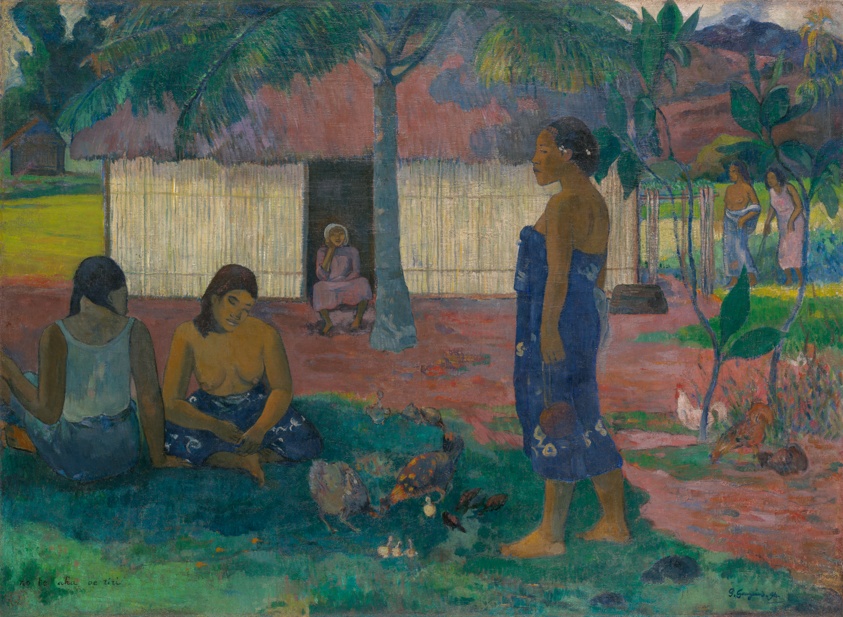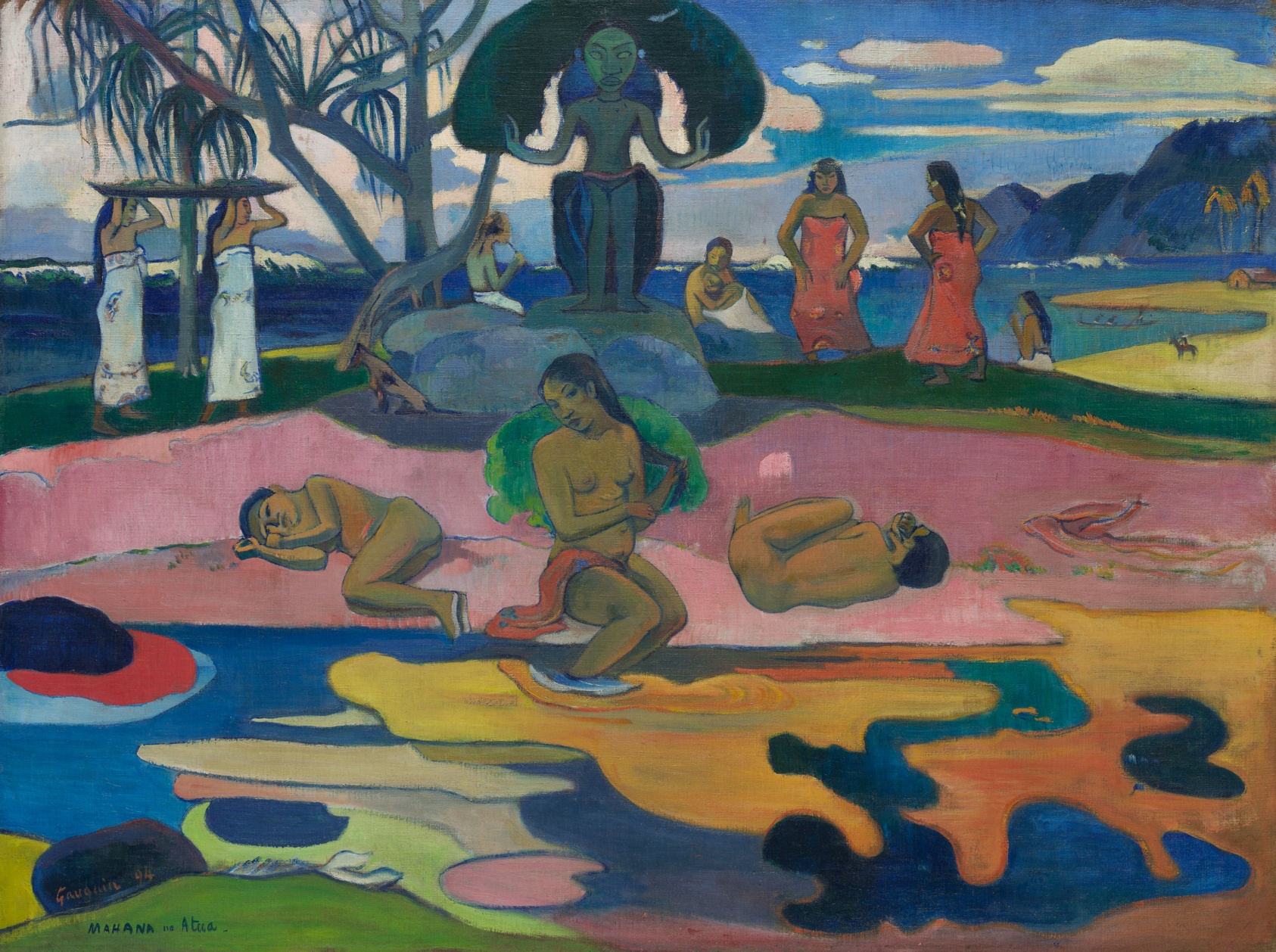
Mahana no atua (Day of the God)
Paul Gauguin · 1894
- Medium
- Oil on linen canvas
- Original size
- 68 × 91 cm (26 7/8 × 36 in.); Framed: 87.7 × 110.5 × 6.4 cm (34 1/2 × 43 1/2 × 2 1/2 in.)
- Currently held
- Art Institute of Chicago
- Movement
- Post-Impressionism
Mahana no atua is one of Gauguin's most visually arresting works — a Tahitian scene where mythology, landscape, and the human figure dissolve into one another through flat, jewel-bright colour. Painted in 1894 during Gauguin's return to Paris between his two Tahitian periods, the work reflects his sustained effort to create an art rooted in what he called the "primitive" — a rejection of Western perspective and naturalism in favour of bold contours, unmodulated colour, and a dreamlike stillness. The composition is tripartite: the idol dominates the upper centre, worshippers gather at its base, and the lower third dissolves into an almost abstract pool of reflected colour — a device that has no real precedent in Western painting of the period. The title translates as "Day of the God," referring to the Polynesian deity Taaroa, though Gauguin's idol is largely invented, drawing more from his imagination than from documented Māori or Tahitian religious imagery. Now held at the Art Institute of Chicago, this is a painting that rewards time spent with it. Our hand-painted oil reproduction on linen captures the luminous flatness of Gauguin's palette and the precise weight of each boundary line — the qualities that make the original so quietly radical.
Hand-painted oil reproduction
Painted in real oil on stretched canvas by master copyists. Delivered unframed — ready to frame at home.
Choose a size
In Gauguin's style.
Send us a photograph of your family, pet, or home — we'll paint it as a custom oil on stretched canvas in any style you like. From £220.
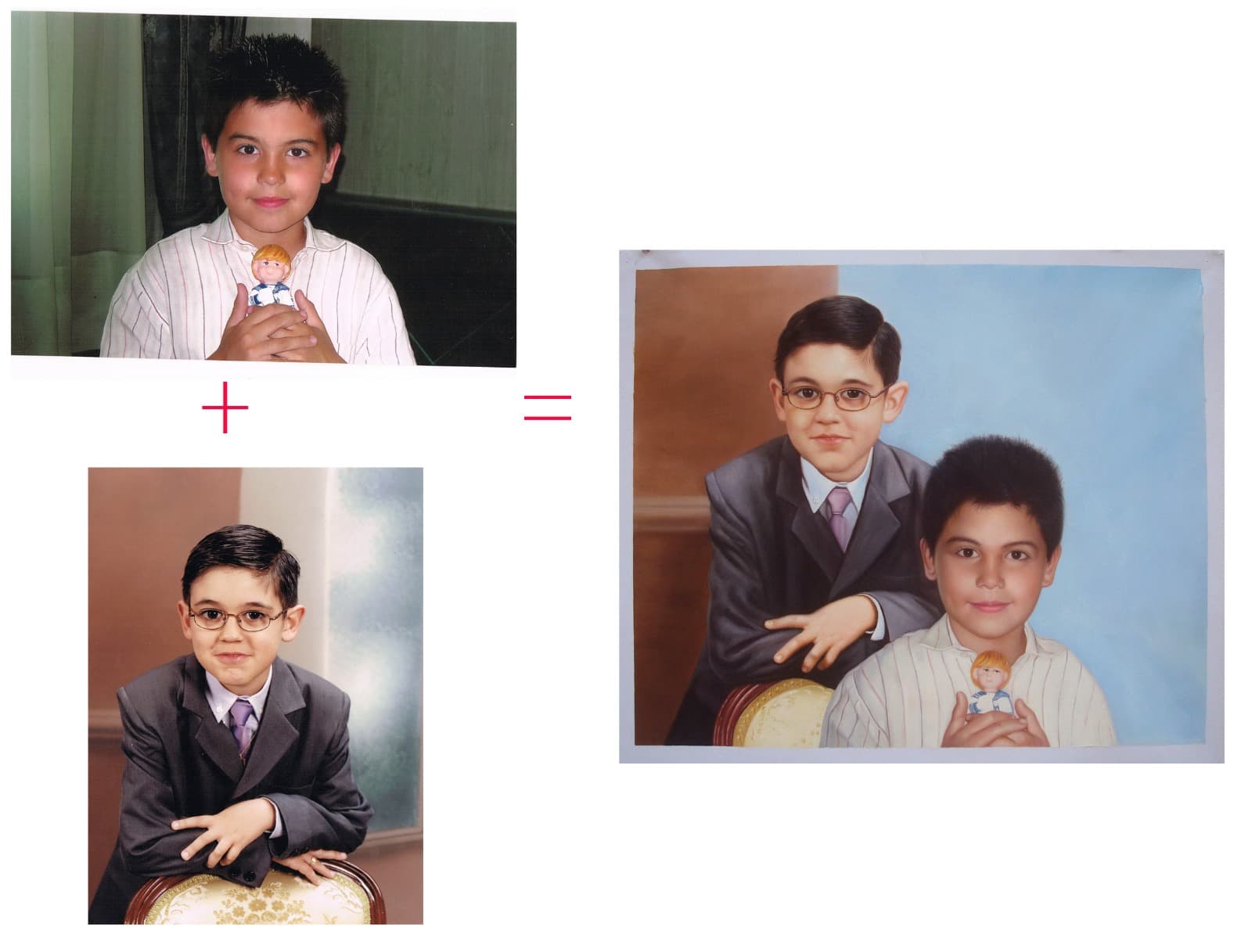
← Real customer commission · see the full gallery
Code WELCOME20 at checkout for 20% off your first commission.
Commission yours →