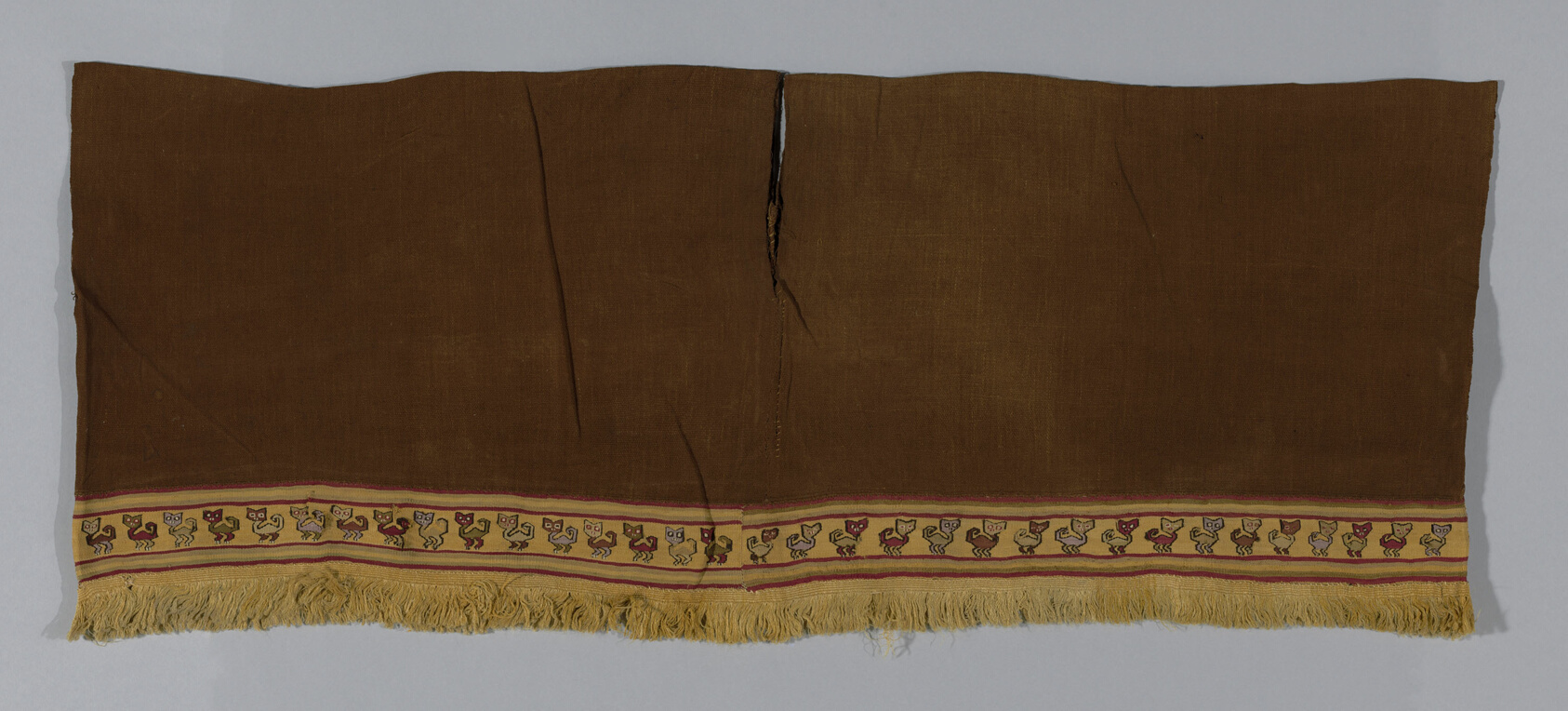
Tunic
Chancay · 1000-1532
- Medium
- Oil on canvas
- Original size
- 36.8 × 96.5 cm (14 1/2 × 38 in.)
- Currently held
- Art Institute of Chicago
- Movement
- Medieval
This painted tunic from the Chancay culture of coastal Peru carries the quiet authority of a civilization that made cloth its primary artistic language. The Chancay people, who flourished along Peru's central coast between roughly 1000 and 1470 CE, were master weavers whose textiles served ritual, social, and funerary purposes. Their tunics are recognisable for bold geometric patterning, stylised human and animal figures, and a restrained palette of ochre, brown, cream, and black drawn from natural dyes. Rather than the dense tapestry weaves of neighbouring Andean cultures, Chancay artists often painted directly onto plain-weave cotton cloth, giving their work an immediacy that bridges textile and pictorial art. Garments like this one were frequently placed in burial bundles as offerings, reflecting a belief that fine cloth was among the most valuable goods one could carry into the afterlife — a value system shared across much of the ancient Andes. The Art Institute of Chicago's collection places this tunic among rare survivors of a tradition where most works perished in the harsh coastal climate. The hand-painted oil reproduction translates the tunic's graphic power and symbolic weight onto canvas, preserving its compositional rhythms in a form built to last generations.
Hand-painted oil reproduction
Painted in real oil on stretched canvas by master copyists. Delivered unframed — ready to frame at home.
Choose a size
In Chancay's style.
Send us a photograph of your family, pet, or home — we'll paint it as a custom oil on stretched canvas in any style you like. From £220.
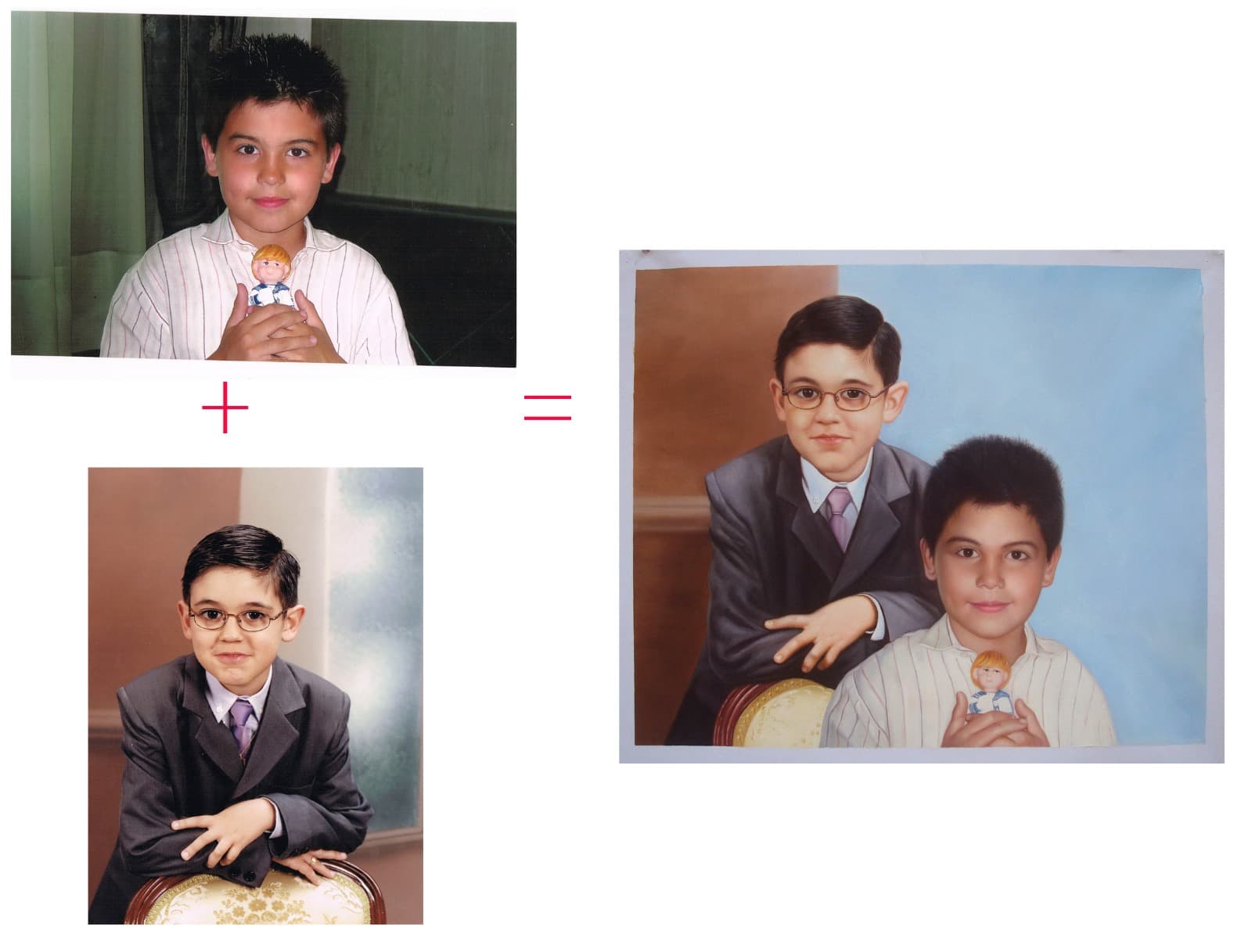
← Real customer commission · see the full gallery
Code WELCOME20 at checkout for 20% off your first commission.
Commission yours →More by Chancay

More Medieval
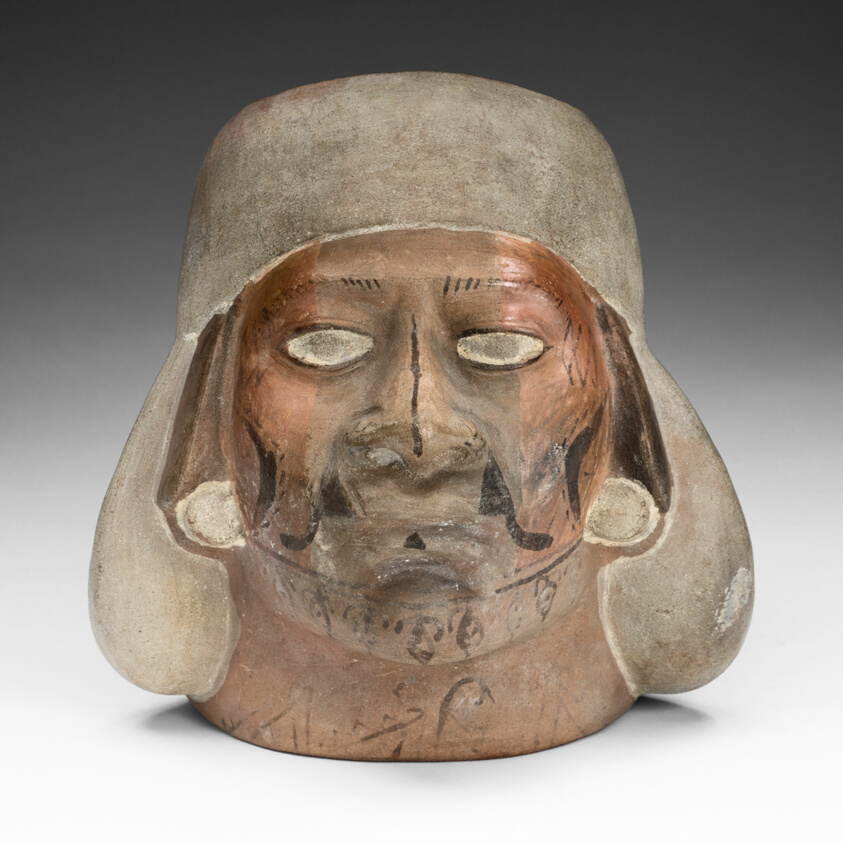
Portrait Vessel of a Young Man with a Scarred Lip
Moche · 100 BCE–500 CE
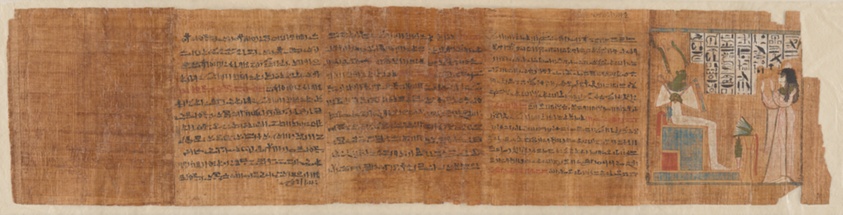
Funerary Papyrus of Tayuhenutmut
Ancient Egyptian · Third Intermediate Period, probably Dynasty 21 (about 1069-945 BCE)
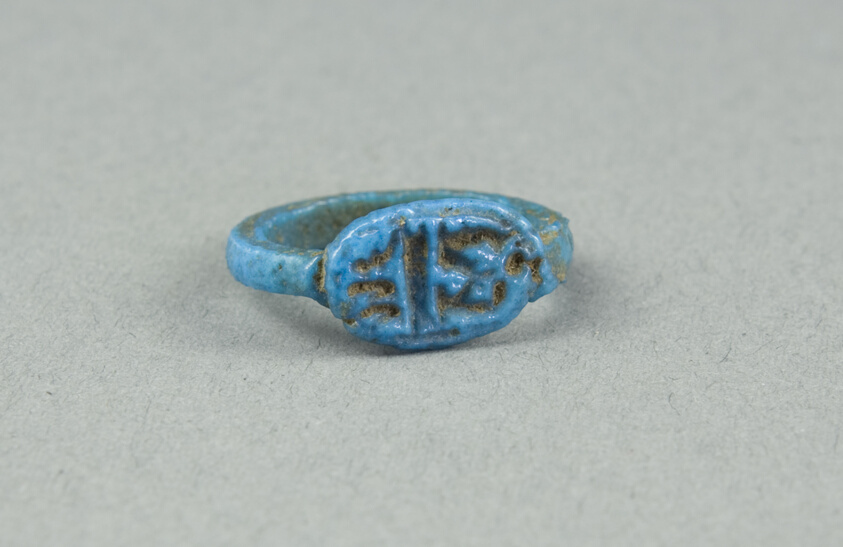
Ring: Ramesses-mry-Amun?
Ancient Egyptian · New Kingdom, Dynasty 20, reign of Ramesses V? (about 1147–1143 BCE)