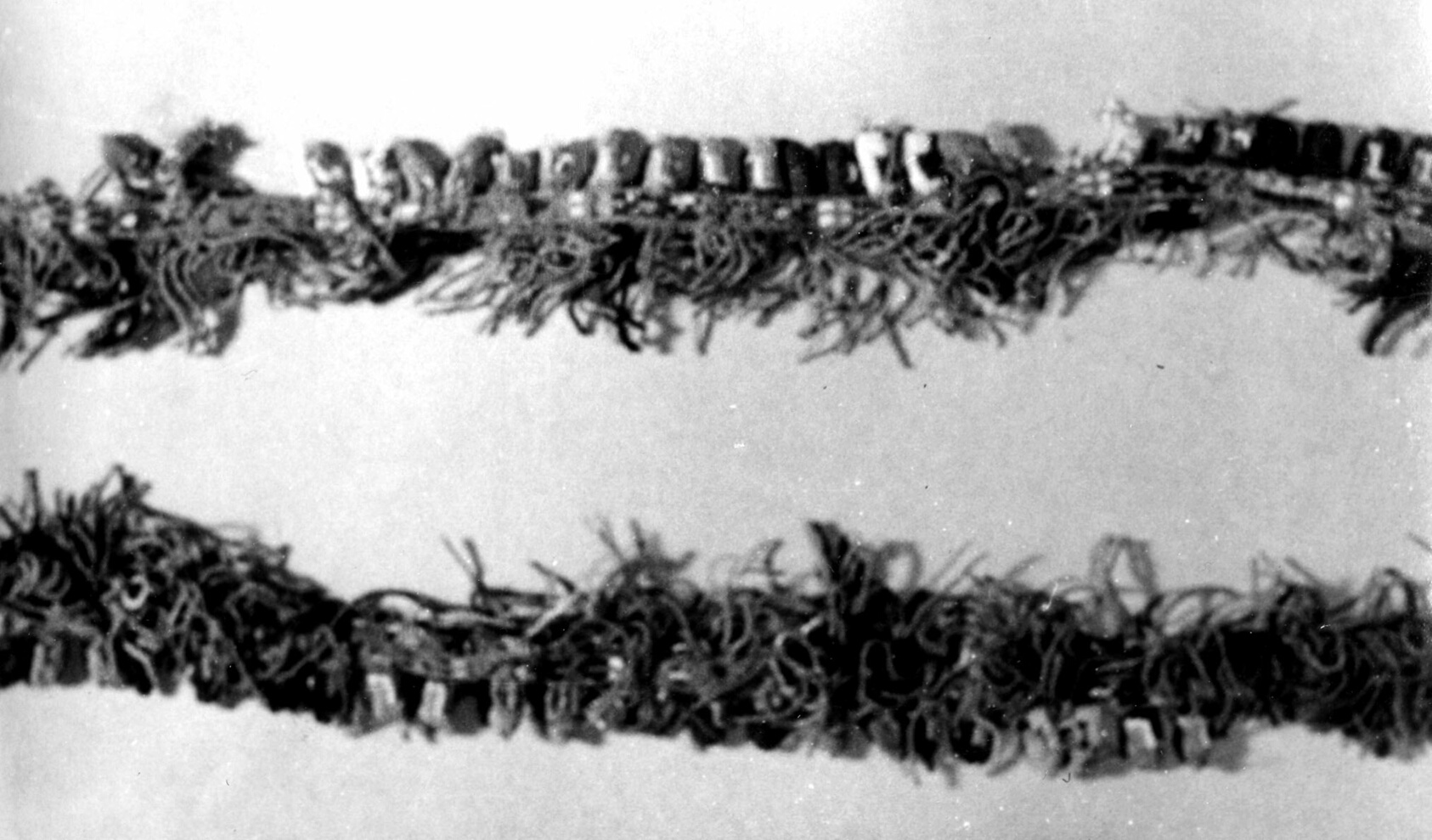
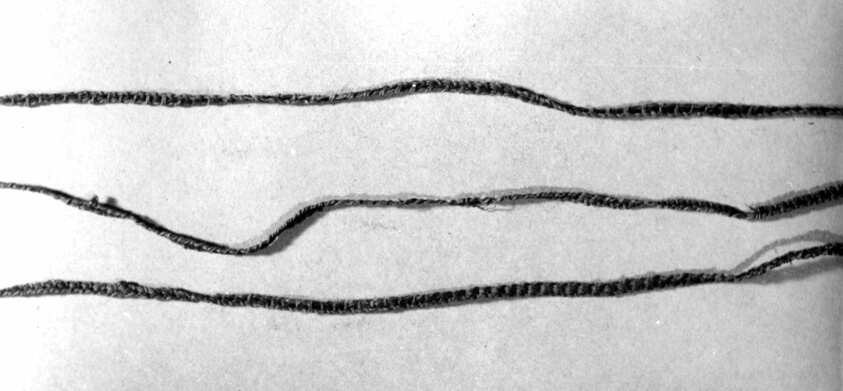
Band
Nasca · 100 BCE-200 CE
- Medium
- Oil on canvas
- Original size
- 96.5 × 6.4 cm (38 × 2 1/2 in.)
- Currently held
- Art Institute of Chicago
- Movement
- Medieval
This fragment of Nasca visual culture distills centuries of Andean artistic tradition into a single, arresting band of form and color. The Nasca people of coastal Peru, flourishing roughly between 100 BCE and 800 CE, developed one of the ancient world's most sophisticated visual languages. Working primarily in ceramics and textiles, their artists used bold outlines, flat planes of vivid color, and highly stylized figures to render the natural and supernatural world. The repeating, interlocking motifs characteristic of Nasca design were not merely decorative — they encoded cosmological meaning, depicting deities, ancestors, and the creatures that connected the human and spirit realms. The Nasca are perhaps best known beyond their art for the Nazca Lines, vast geoglyphs etched into the Peruvian desert floor that remain among the most discussed archaeological phenomena in the Americas, though the painted tradition preserved in collections like the Art Institute of Chicago offers its own quiet revelations. This hand-painted oil reproduction faithfully translates the original's geometry and chromatic intensity onto canvas, preserving the rhythmic precision that has kept Nasca work visually alive across two millennia.
Hand-painted oil reproduction
Painted in real oil on stretched canvas by master copyists. Delivered unframed — ready to frame at home.
Choose a size
In Nasca's style.
Send us a photograph of your family, pet, or home — we'll paint it as a custom oil on stretched canvas in any style you like. From £220.
← Real customer commission · see the full gallery
Code WELCOME20 at checkout for 20% off your first commission.
Commission yours →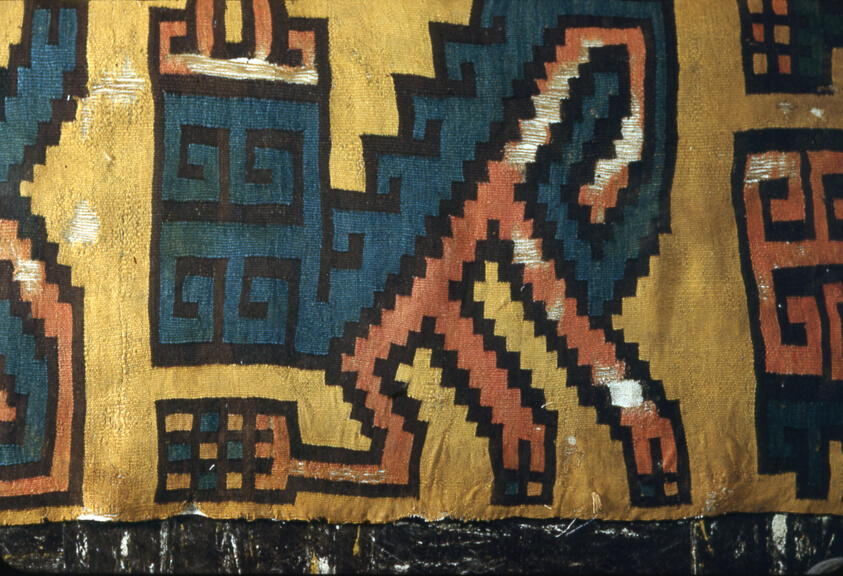
More Medieval
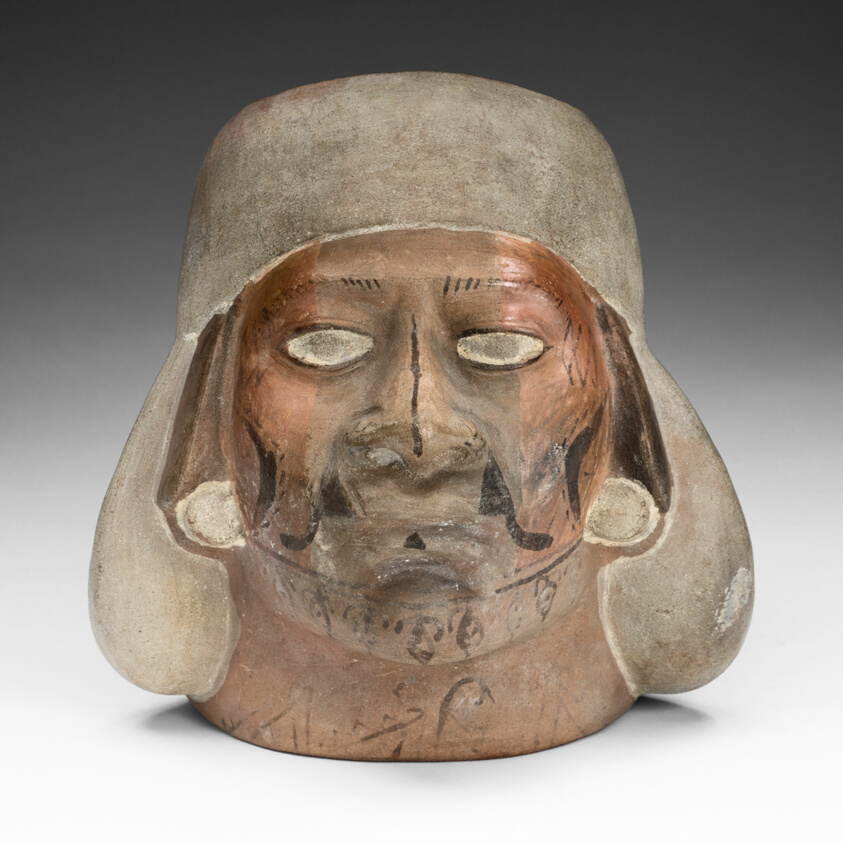
Portrait Vessel of a Young Man with a Scarred Lip
Moche · 100 BCE–500 CE
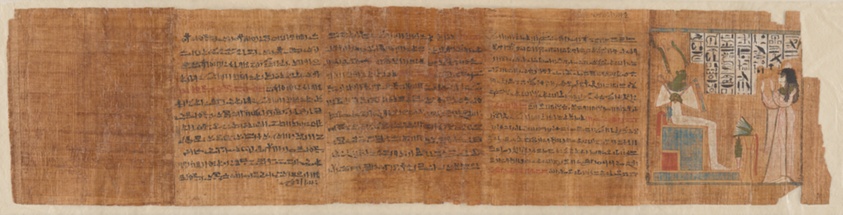
Funerary Papyrus of Tayuhenutmut
Ancient Egyptian · Third Intermediate Period, probably Dynasty 21 (about 1069-945 BCE)
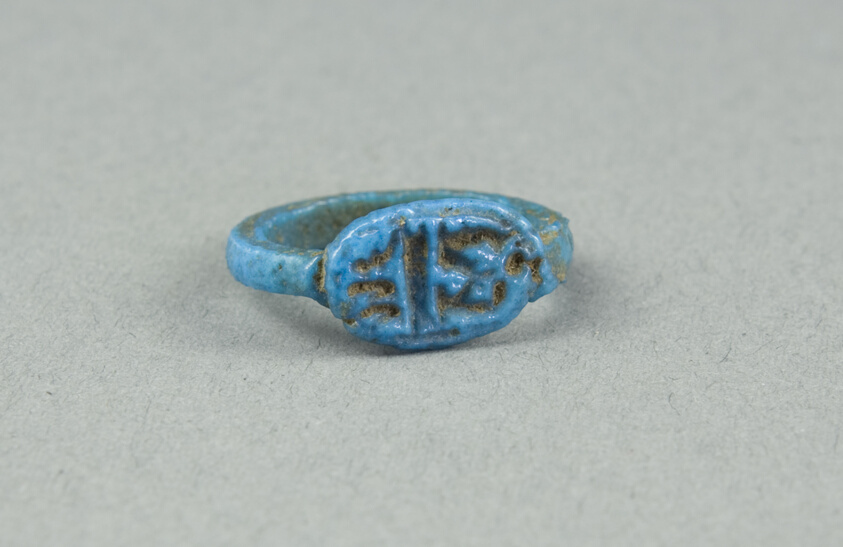
Ring: Ramesses-mry-Amun?
Ancient Egyptian · New Kingdom, Dynasty 20, reign of Ramesses V? (about 1147–1143 BCE)