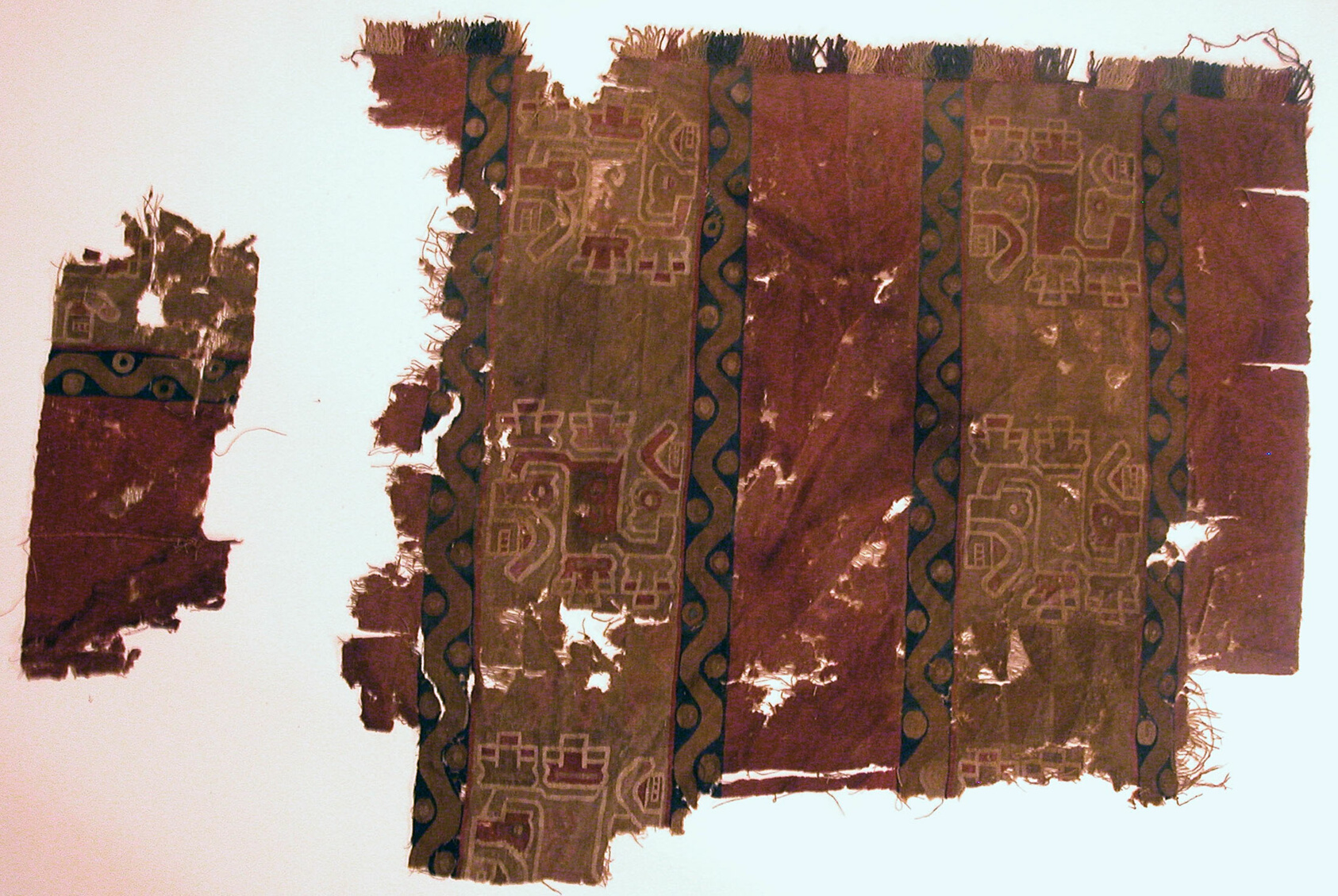
Fragments (From a Tunic)
Wari · 600-800
- Medium
- Oil on canvas
- Original size
- a: 64.2 × 57.3 cm (25 1/4 × 22 1/2 in.); b: 32 × 14.7 cm (12 1/2 × 5 1/2 in.)
- Currently held
- Art Institute of Chicago
- Movement
- Medieval
Fragments (From a Tunic) offers a window into one of the ancient Andes' most visually striking textile traditions, its bold geometric patterning as arresting today as it was fourteen centuries ago. The Wari people, who built a major empire across highland and coastal Peru between roughly 600 and 1000 CE, elevated weaving to the highest form of cultural expression. Their tunics — known as unku — were woven with extraordinary technical precision using a discontinuous warp-and-weft technique that allowed dense, interlocking designs to be built colour by colour without a single thread crossing where it wasn't intended. The imagery, typically featuring abstracted profile figures, stacked faces, and repeating angular motifs in saturated reds, greens, and golds, carried deep ritual and political meaning. Wari tunics were so highly valued that they were placed with the dead as prestige objects, and surviving examples are found in some of the world's most significant museum collections, the Art Institute of Chicago's holdings among the finest. This hand-painted oil reproduction translates the flat woven geometry of the original into richly layered paint, preserving the precision of the composition while giving the colour and form a depth that honours the work's enduring power.
Hand-painted oil reproduction
Painted in real oil on stretched canvas by master copyists. Delivered unframed — ready to frame at home.
Choose a size
In Wari's style.
Send us a photograph of your family, pet, or home — we'll paint it as a custom oil on stretched canvas in any style you like. From £220.

← Real customer commission · see the full gallery
Code WELCOME20 at checkout for 20% off your first commission.
Commission yours →

More Medieval
Portrait Vessel of a Young Man with a Scarred Lip
Moche · 100 BCE–500 CE
Funerary Papyrus of Tayuhenutmut
Ancient Egyptian · Third Intermediate Period, probably Dynasty 21 (about 1069-945 BCE)
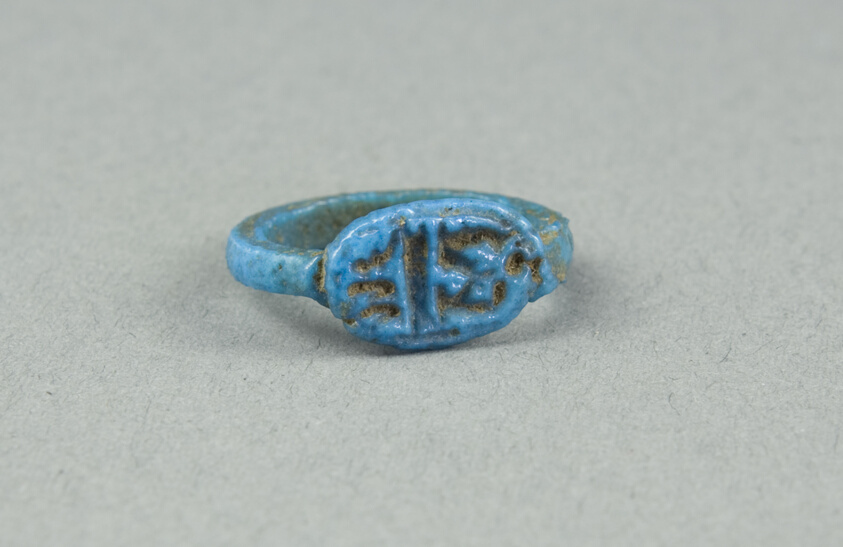
Ring: Ramesses-mry-Amun?
Ancient Egyptian · New Kingdom, Dynasty 20, reign of Ramesses V? (about 1147–1143 BCE)