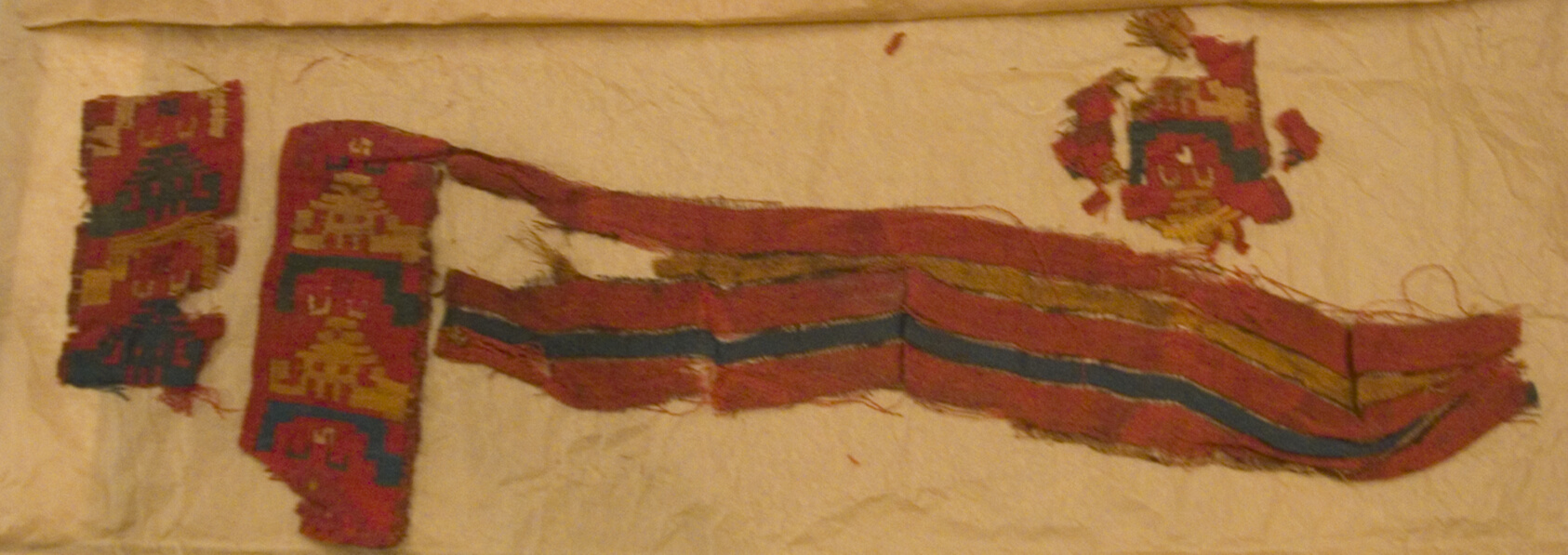
Fragments
Nasca · 700 CE-900 CE
- Medium
- Oil on canvas
- Currently held
- Art Institute of Chicago
- Movement
- Medieval
Fragments offers a rare window into the visual language of the ancient Nasca civilisation, a culture that left some of the most visually arresting art to emerge from pre-Columbian South America. The Nasca people, who flourished along the southern coast of Peru, developed a remarkably distinctive aesthetic rooted in bold geometric forms, stylised figures, and a sophisticated command of colour that has retained its intensity across more than a millennium. Rather than a single named artist, this work represents the collective craft tradition of Nasca weavers and artisans, for whom visual imagery served as a carrier of cosmological and social meaning. The term "Fragments" is itself telling — what survives is partial, yet the preserved portions communicate the rigour and intention of the original whole. The Nasca are perhaps best known outside specialist circles for the vast geoglyphs etched into the Peruvian desert, though their textile and ceramic traditions were equally sophisticated and drew on the same symbolic vocabulary of animals, deities, and abstract patterning. This hand-painted oil reproduction works from the Art Institute of Chicago's record of the original, translating its colours and compositional energy into a medium that brings the ancient imagery into quiet, lasting presence on the wall.
Hand-painted oil reproduction
Painted in real oil on stretched canvas by master copyists. Delivered unframed — ready to frame at home.
Choose a size
In Nasca's style.
Send us a photograph of your family, pet, or home — we'll paint it as a custom oil on stretched canvas in any style you like. From £220.

← Real customer commission · see the full gallery
Code WELCOME20 at checkout for 20% off your first commission.
Commission yours →
More Medieval
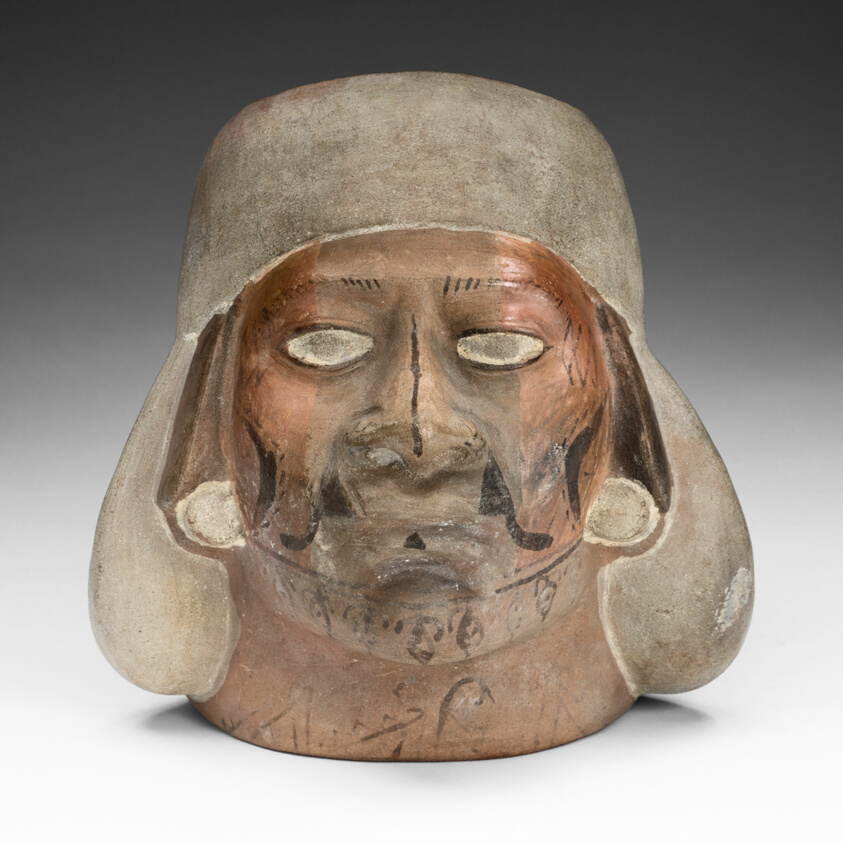
Portrait Vessel of a Young Man with a Scarred Lip
Moche · 100 BCE–500 CE
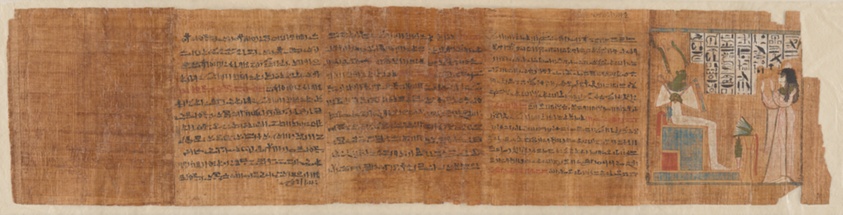
Funerary Papyrus of Tayuhenutmut
Ancient Egyptian · Third Intermediate Period, probably Dynasty 21 (about 1069-945 BCE)
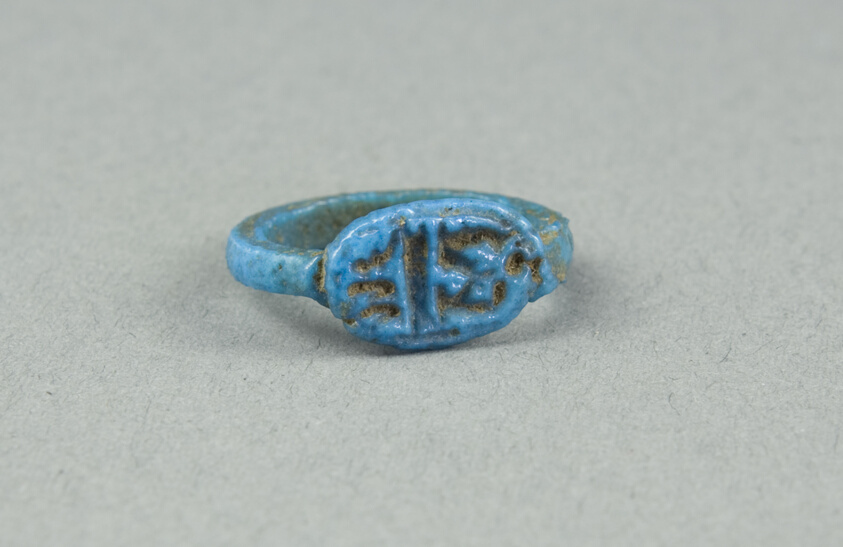
Ring: Ramesses-mry-Amun?
Ancient Egyptian · New Kingdom, Dynasty 20, reign of Ramesses V? (about 1147–1143 BCE)