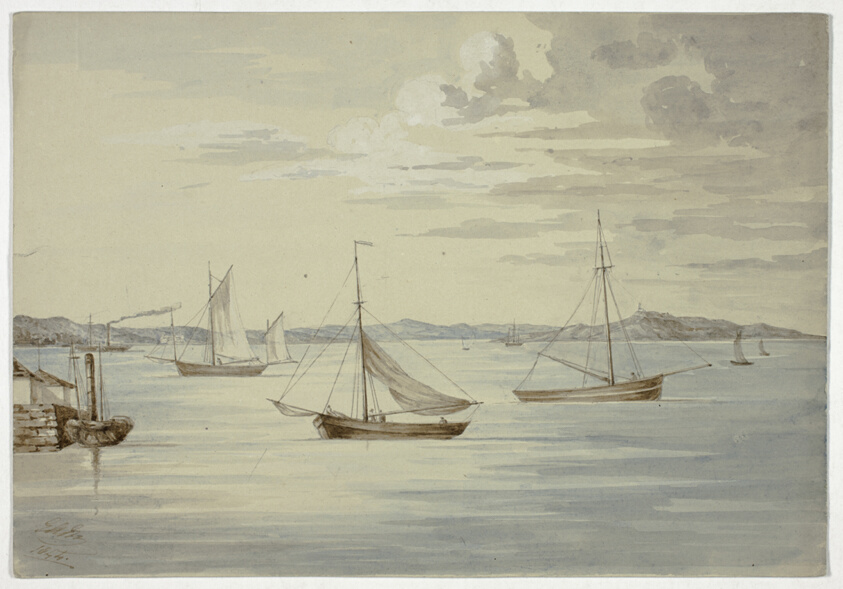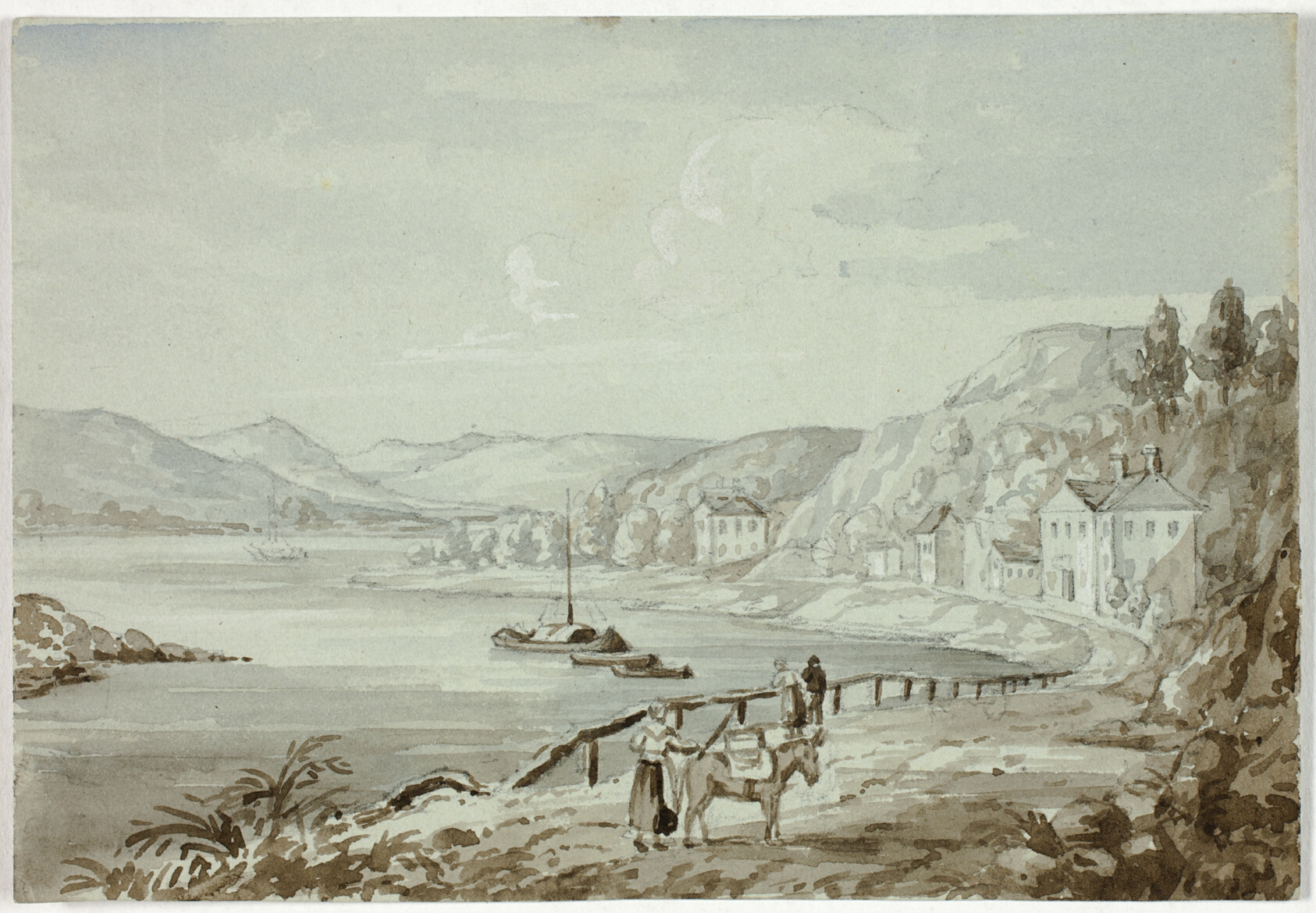
On the Rhine (recto), and Mother and Child (verso)
Elizabeth Murray · 1841
- Medium
- Brush and brown and gray wash, heightened with white gouache, over graphite (recto), and graphite (verso), on blue wove paper
- Original size
- 10.7 × 15.6 cm (4 1/4 × 6 3/16 in.)
- Currently held
- Art Institute of Chicago
- Movement
- Romanticism
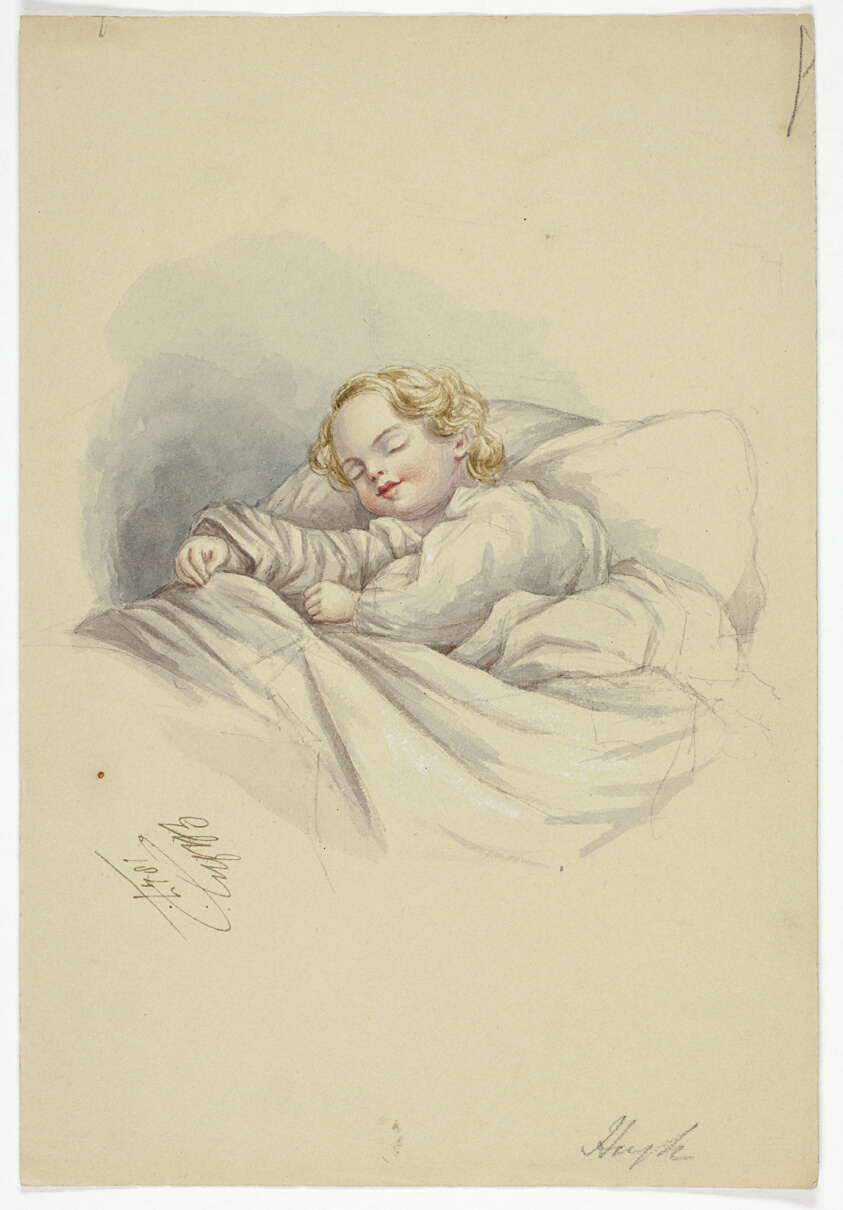
Drawn on both sides of a single sheet of blue wove paper, this 1841 work offers an intimate glimpse into Elizabeth Murray's working practice — a Rhine landscape on one side, a tender mother-and-child study on the other. Murray was a British artist who spent much of her career traveling through Europe and North Africa at a time when few women worked as professional travel artists. She was a skilled draughtswoman, and this sheet demonstrates her command of tonal wash drawing: the brown and gray washes build atmosphere economically, while touches of white gouache lift light from the blue-tinted ground in a way that feels both spontaneous and controlled. The Rhine view in particular captures the hazy, expansive quality of river scenery that made the Rhine a pilgrimage for Romantic-era artists and tourists alike. The double-sided format is characteristic of working drawings made on the road — paper was precious, and Murray used every inch, leaving us a rare paired document of observation and feeling from a single moment in 1841. Our hand-painted oil reproduction translates the delicate layering of wash and gouache into the richer, more tactile language of oil on canvas, preserving the tonal subtlety and quiet intimacy that make the original so quietly compelling.
Hand-painted oil reproduction
Painted in real oil on stretched canvas by master copyists. Delivered unframed — ready to frame at home.
Choose a size
In Murray's style.
Send us a photograph of your family, pet, or home — we'll paint it as a custom oil on stretched canvas in any style you like. From £220.

← Real customer commission · see the full gallery
Code WELCOME20 at checkout for 20% off your first commission.
Commission yours →