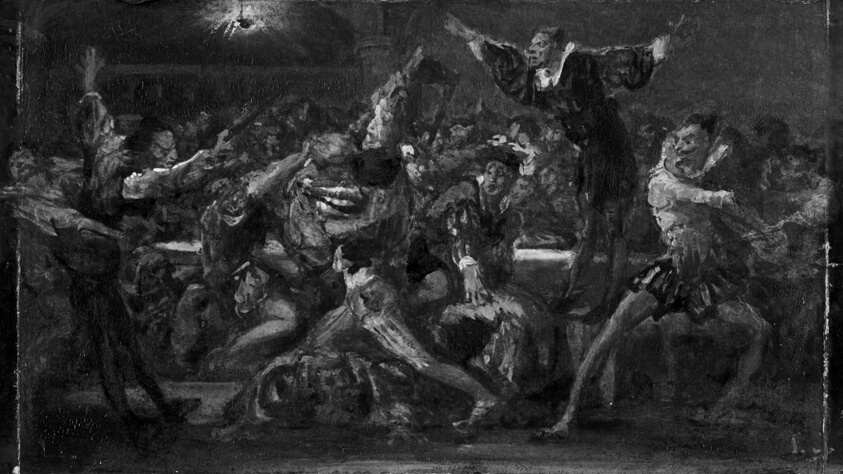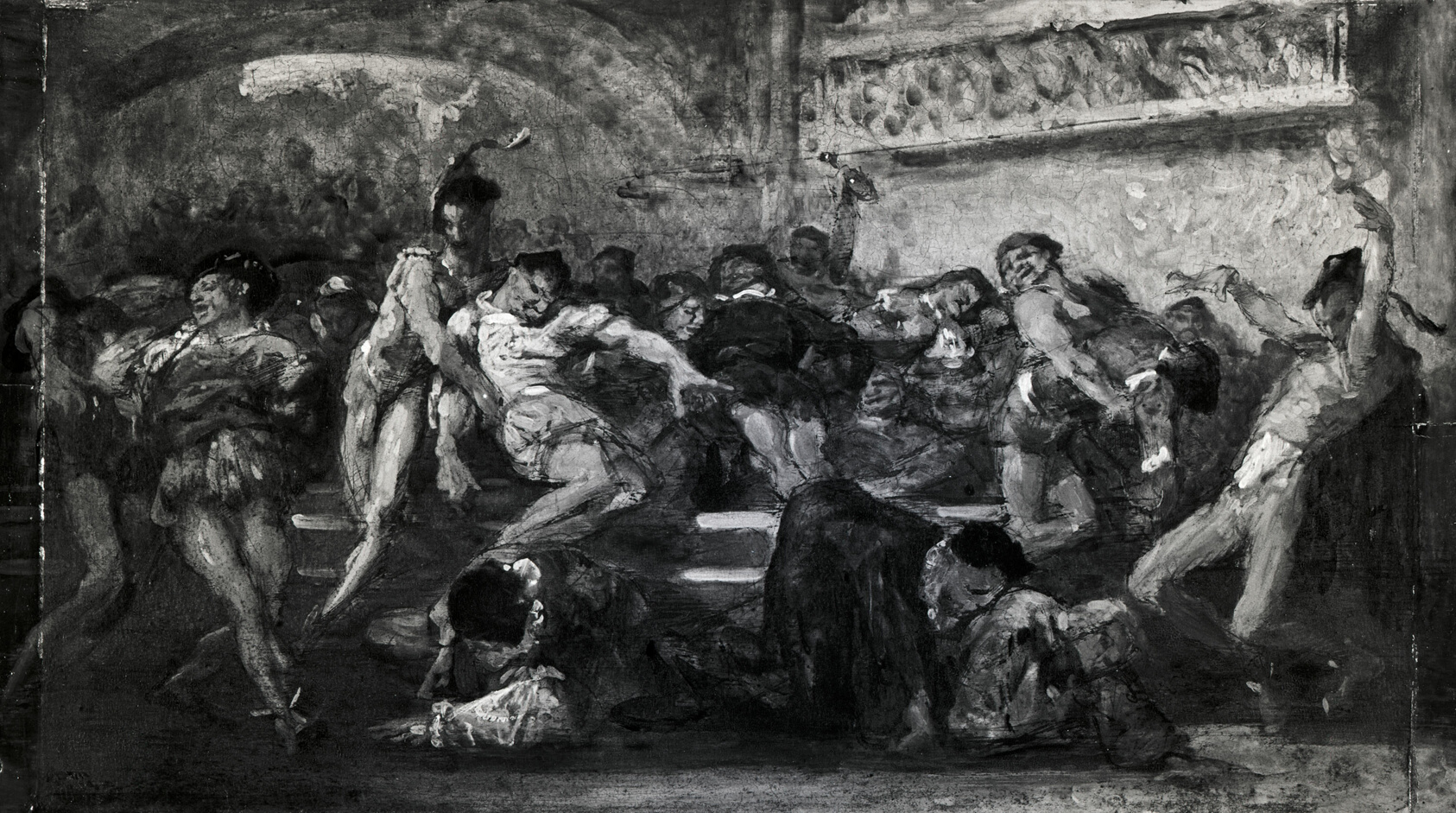
The Carousal (Scene from Faust?)
French School · c. 1860–70
- Medium
- Oil on panel
- Original size
- 19.7 × 35.2 cm (7 3/4 × 13 7/8 in.); Framed: 31.8 × 45.1 × 4.5 cm (12 1/2 × 17 3/4 × 1 3/4 in.)
- Currently held
- Art Institute of Chicago
- Movement
- Romanticism
A swirling, candlelit scene of revelry, this mid-nineteenth-century French panel painting carries the charged atmosphere of a literary world on the edge of moral collapse — whether or not Goethe's Faust was truly its source. French painters of the 1860s and 1870s worked in the long shadow of Romanticism, and scenes of carousing figures drawn from literature or history were a favoured vehicle for exploring light, gesture, and collective abandon. The oil-on-panel format — more common in earlier centuries but still used by French painters for smaller, intimate works — lends the composition a jewelled intensity, the paint sitting close and luminous against a rigid ground. The brushwork typical of this era balances loose figural energy with careful tonal gradation, giving the scene both spontaneity and weight. The question mark in the work's own title is telling: even the Art Institute of Chicago, which holds the original, leaves open whether the subject is a direct illustration of Faust or simply evokes its spirit — a reflection of how thoroughly Goethe's drama had saturated French visual culture following Delacroix's celebrated Faust lithographs of 1828. A skilled hand-painted oil reproduction brings this atmospheric quality fully to life, preserving the warmth, depth, and painterly texture that a print simply cannot replicate.
Hand-painted oil reproduction
Painted in real oil on stretched canvas by master copyists. Delivered unframed — ready to frame at home.
Choose a size
In School's style.
Send us a photograph of your family, pet, or home — we'll paint it as a custom oil on stretched canvas in any style you like. From £220.
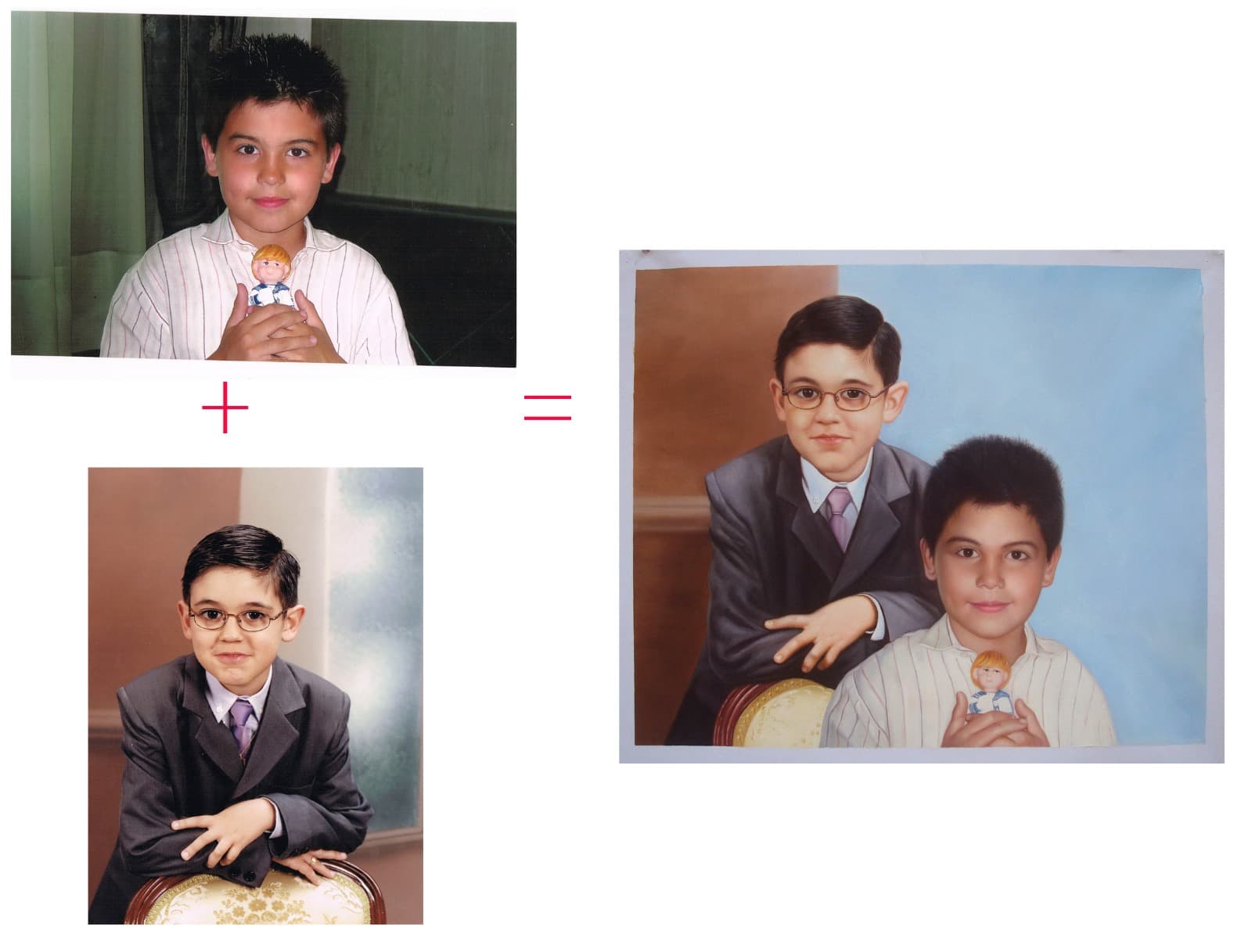
← Real customer commission · see the full gallery
Code WELCOME20 at checkout for 20% off your first commission.
Commission yours →