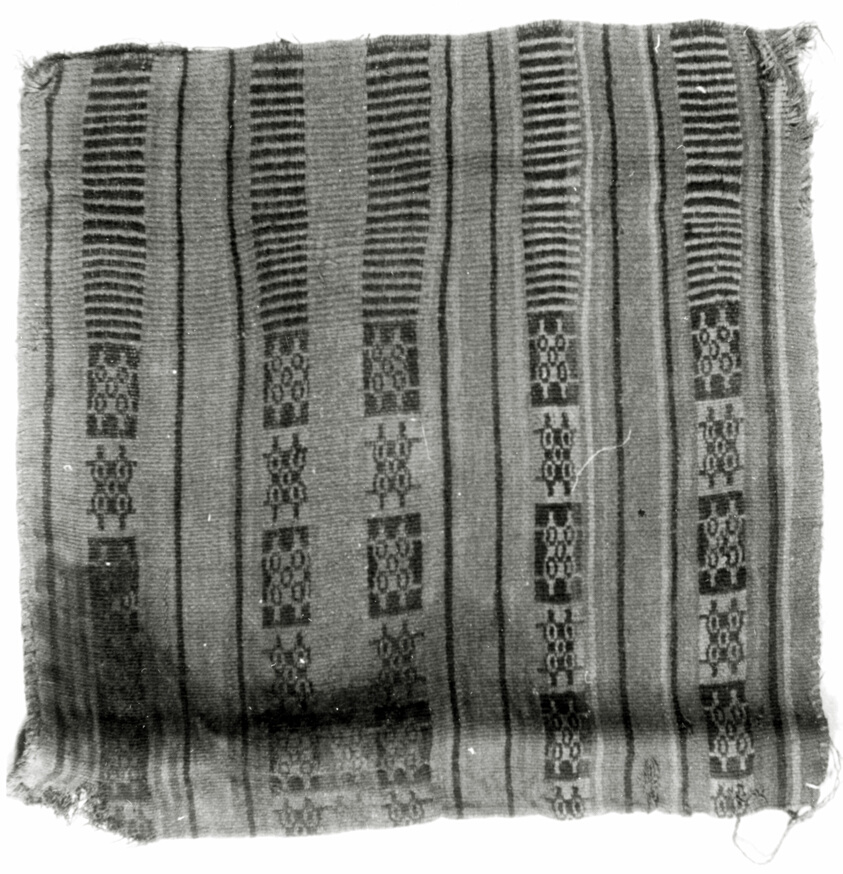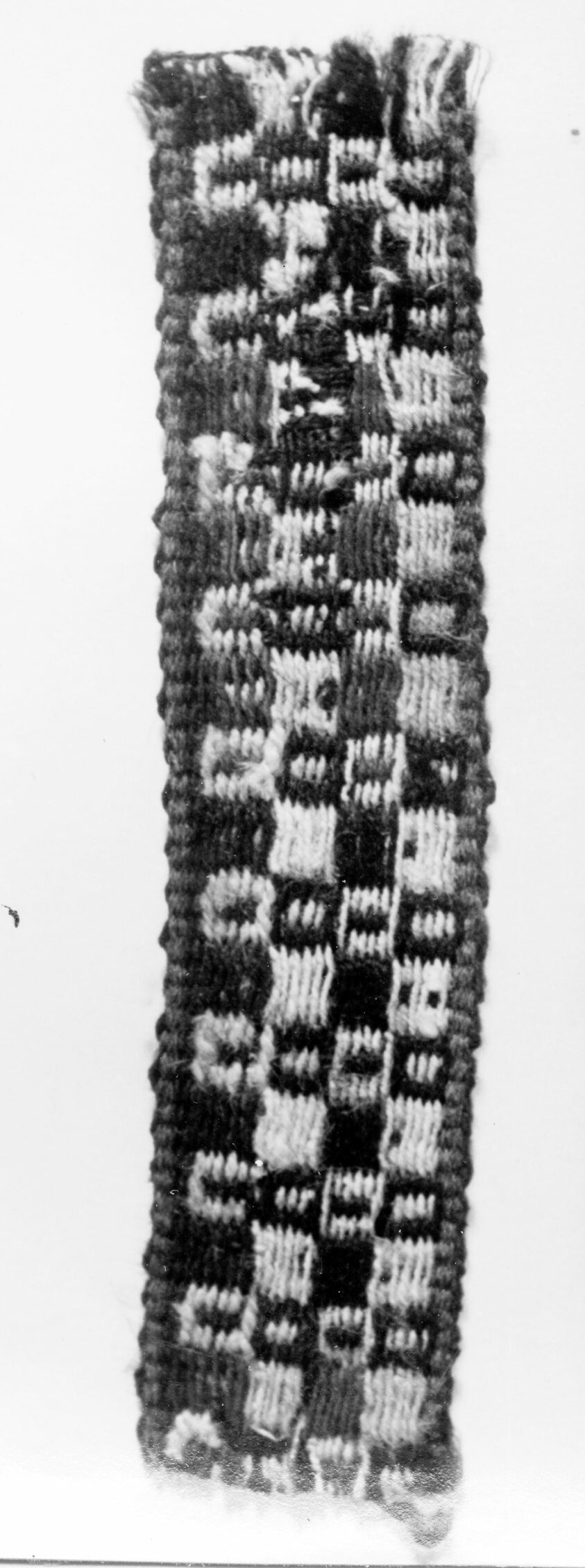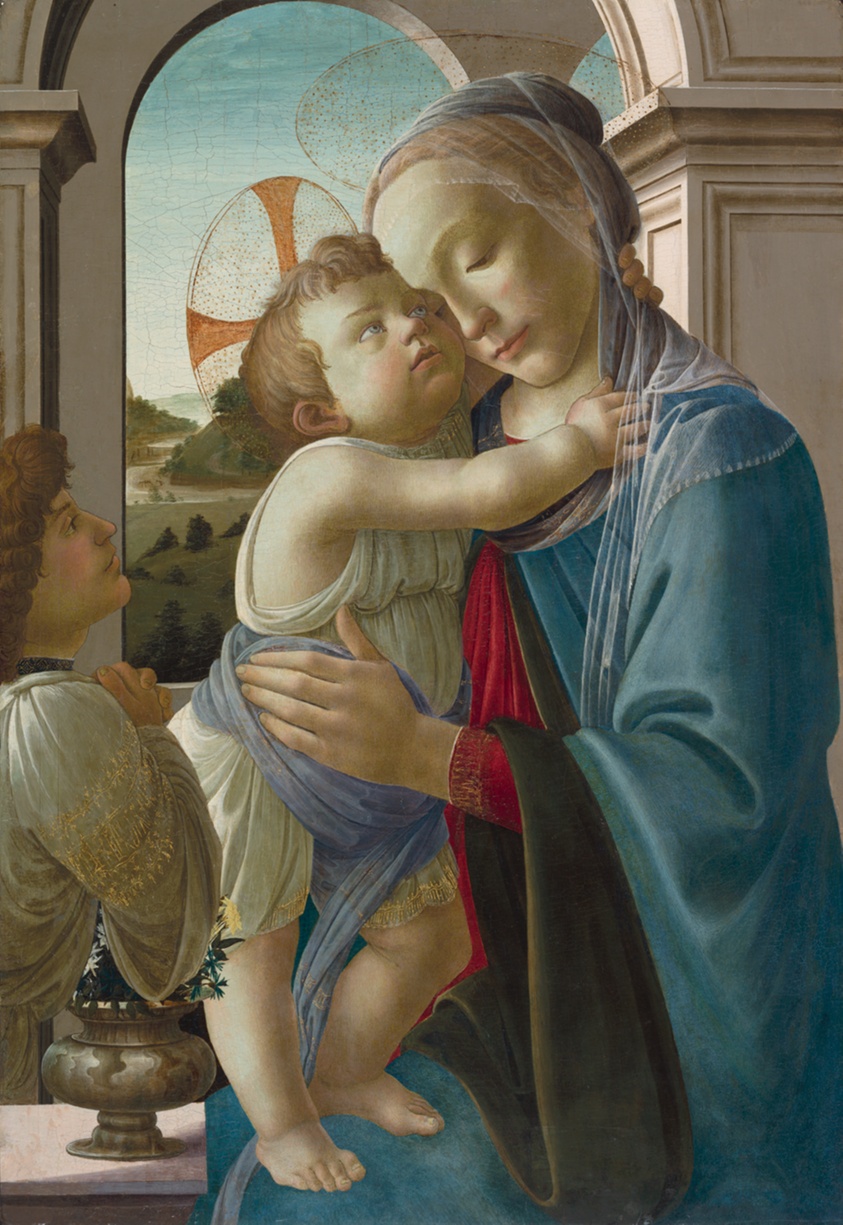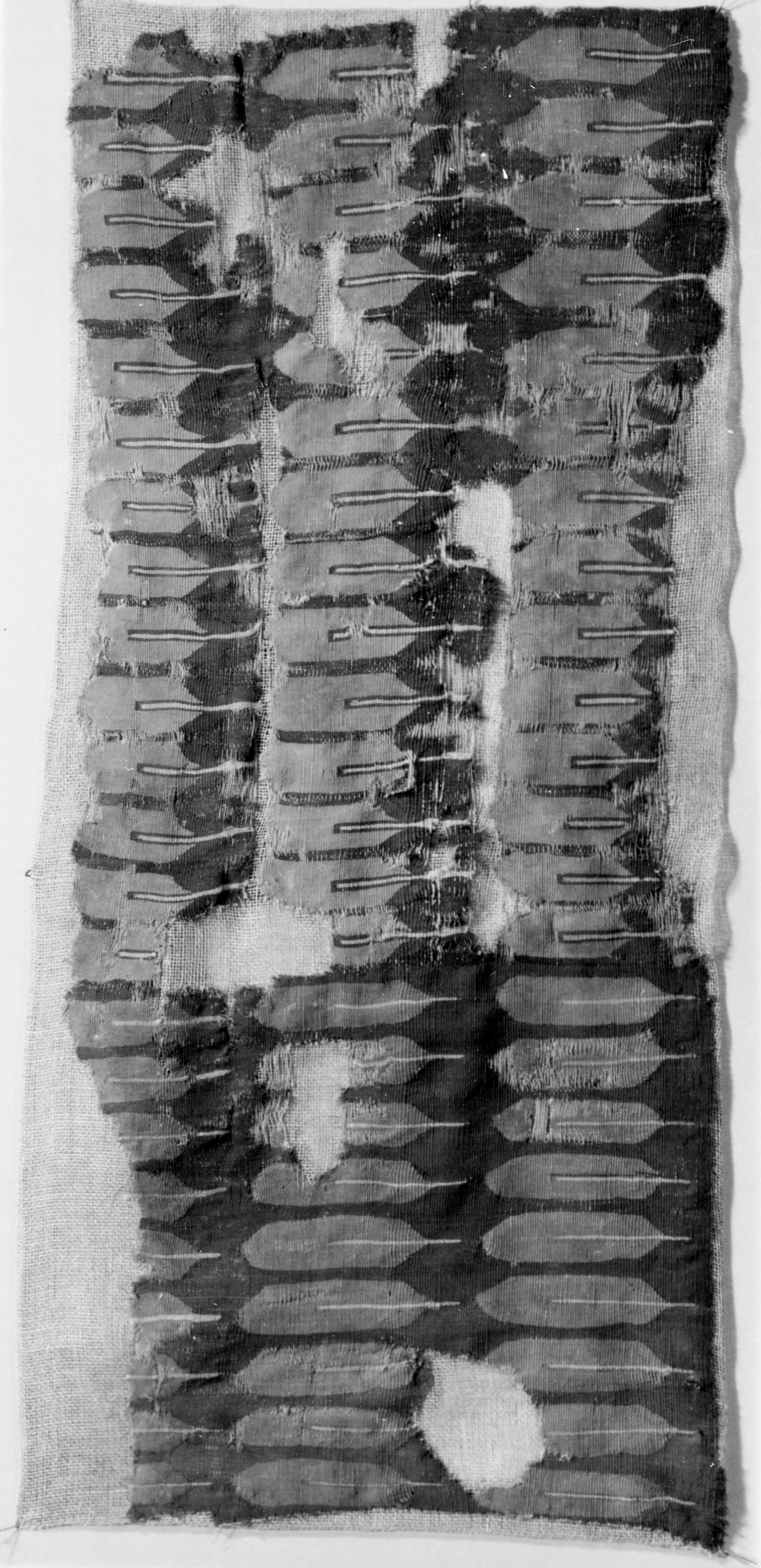
Tunic Fragment (?)
Inca · AD. 1476/1532
- Medium
- Oil on canvas
- Original size
- 57.2 × 25.4 cm (22 1/2 × 10 in.)
- Currently held
- Art Institute of Chicago
- Movement
- Italian Renaissance
This Inca tunic fragment, woven during the height of the Tawantinsuyu empire, carries the geometric precision and symbolic weight that made Andean textiles among the most sophisticated art forms in the pre-Columbian world. The Inca did not separate craft from art — the finest woven garments, known as cumbi, were produced by skilled weavers called acllacona and held a cultural status equivalent to precious metals in ceremony and exchange. The interlocking geometric motifs found on imperial tunics, called tocapu, served as a visual language, encoding identity, rank, and lineage in repeating bands of tightly controlled colour. Spanish chroniclers documented how textile gifts from the Sapa Inca to subordinate rulers were among the most politically significant acts of the empire, underscoring just how charged these objects were beyond their function as clothing. Held in the collection of the Art Institute of Chicago, this fragment survives as a rare window into a visual tradition largely dismantled during the colonial period. The hand-painted oil reproduction translates the fragment's structured geometry and warm earth tones onto canvas with care, preserving the rhythm and intention of the original weaving in a durable form suited to any space.
Hand-painted oil reproduction
Painted in real oil on stretched canvas by master copyists. Delivered unframed — ready to frame at home.
Choose a size
In Inca's style.
Send us a photograph of your family, pet, or home — we'll paint it as a custom oil on stretched canvas in any style you like. From £220.
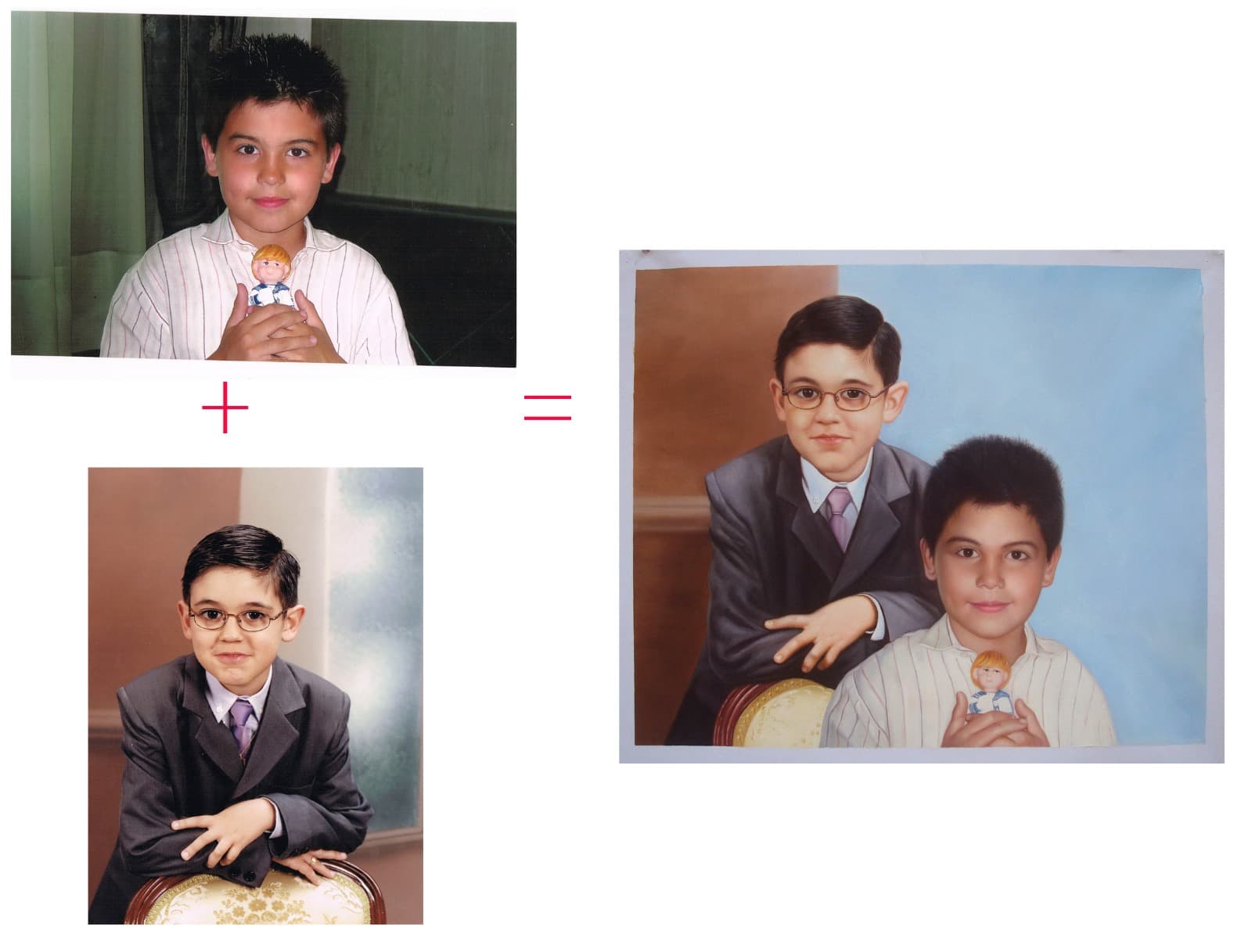
← Real customer commission · see the full gallery
Code WELCOME20 at checkout for 20% off your first commission.
Commission yours →