buying · 9 min read
Hand-Painted Oil Painting Reproductions vs Giclée vs Canvas Prints: What You Are Paying For
A canvas print of a Monet costs about £30; hand-painted oil painting reproductions start at £129. What each is made of, how long it lasts, how to tell them apart.
By Thomas Mark
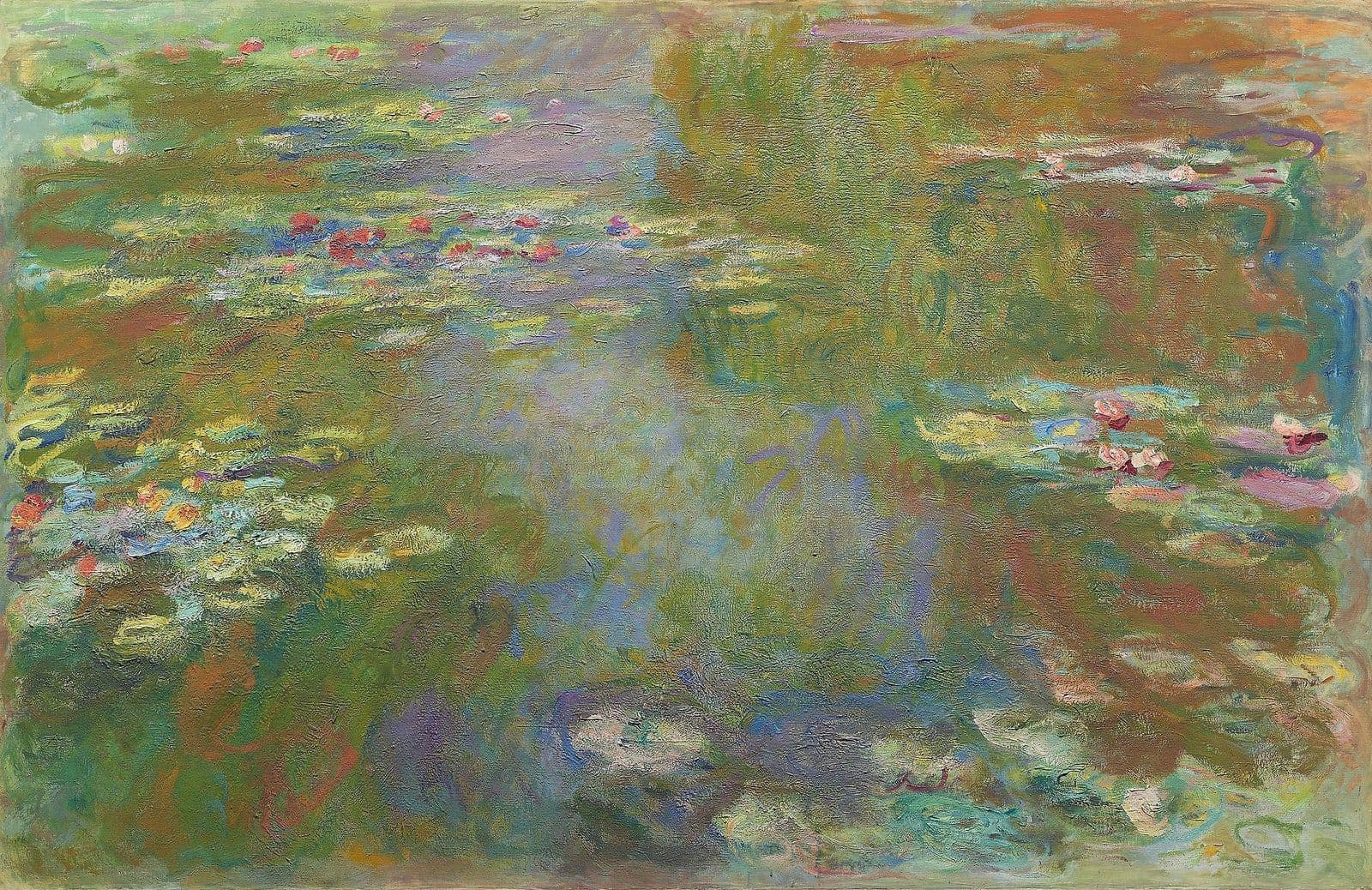
A canvas print of a famous painting costs about £30. A giclée of the same image costs £60 to £250. A hand-painted oil reproduction — a real painting, of the same picture — starts at £129 and runs to £459 at 36 × 48″. The difference is not resolution or paper stock. It is whether someone stood in front of a canvas for two or three days.
This guide is about reproductions of paintings that already exist: the Monets, Rembrandts and Vermeers in the masterworks wing. If what you want is your own photograph painted, that is a different comparison with different numbers, covered in oil painting vs print vs canvas.
The five formats, cheapest first
Canvas print, about £15 to £60. An inkjet prints the image onto coated canvas, stretched over bars. The canvas is real; the painting on it is not. It is ink, not paint. Dye inks in a sunlit room lose their reds first, and you notice within a few years. It fills a wall cheaply, and there is nothing wrong with that.
Giclée, about £60 to £250. An archival print, usually pigment ink on cotton-rag canvas or heavy paper. Better colour, better substrate, pigment inks rated by their makers in decades rather than years out of direct sun. The giclée vs canvas print decision is the easy one here: if you are buying a print at all, buy the good print.
Oil-effect or hand-finished giclée, about £100 to £300. A giclée someone has gone over with clear gel medium, or a few strokes of real paint, for surface texture. The image underneath is still printed. This is the format most often mis-sold, because "hand-finished" and "hand-painted" are one word apart and mean entirely different things.
Hand-painted oil reproduction, £129 to £459. A copyist paints the picture in oil, by hand, from a high-resolution museum file — eight to twenty-five hours of work depending on size and how busy the composition is. The oil paint and the layering are real. Hand-painted oil painting reproductions are the only format here that behaves like a painting under a lamp.
The original, priced in millions. Auction house or museum wall. Included for the top of the ladder.
How a hand-painted oil painting reproduction is actually made
The painter works from the museum's own high-resolution photograph, not a postcard. Ours are painted by professional copyists who reproduce masterworks full time, which is the honest reason a real oil painting can cost £199 rather than £1,900.
The canvas is primed and the composition blocked in thin in one sitting. Then it waits. Oil does not dry so much as oxidise, and a layer needs days before the next can go on top without lifting it. That drying time, not the painting time, is why the whole thing takes about three to four weeks plus delivery. A painter could finish a 16 × 20″ Vermeer in three days of work, but not in three days of calendar.
When it is done you get a photograph of the finished painting before anything ships, and if the colour is off we keep working until it is right. There is no digital preview, no mock-up and no sketch to sign off, and we do not send work-in-progress shots: a half-dry underlayer looks alarming and tells you nothing.
Then it is taken off its bars, dries fully and ships rolled in a tube, unframed. Paintings have travelled that way for two centuries; your local framer stretches or mounts it. You order and pay on the painting's page, and delivery is included wherever it is going.
How to spot an oil-effect print sold as hand-painted
The listing will not tell you; the arithmetic will. A painter working eight to twenty-five hours cannot be paid from a £79 sale price that also covers canvas, paint, delivery and margin. If a "hand-painted oil" is priced like a print, it is a print.
Then the edges. A printed canvas wraps the image round the sides or shows a clean margin with a printed edge. If you are unsure, ask the seller for a photograph of the actual canvas rather than a mock-up.
Then whether the texture agrees with the image. A real painting can be perfectly smooth — a Vermeer has no ridges to find — but whatever surface it has follows the picture. On an oil-effect giclée the gel is spread across the whole surface in a generic swirl, so a flat patch of sky carries the same texture as an eye.
And "museum quality reproduction" is a marketing phrase with no standard behind it. It appears on £25 posters. Read the material description instead.
Which paintings reproduce well by hand, and which do not
The hand-painted reproduction vs print question has a different answer for different pictures, and this is the part most shops will not tell you.
Reproduce beautifully by hand: Vermeer, Rembrandt, Ingres, the Dutch Golden Age generally, English portraiture, most academic realism. These are built from thin controlled layers, where the effect lives in the drawing and the light. A good copyist gets genuinely close, and the object does what the original does — it changes as you walk past it.
Reproduce well with a caveat: Van Gogh, late Monet, Sargent, anything with heavy impasto or fast visible brushwork. A copyist can paint these, but they are interpreting another painter's hand rather than tracing an image. Expect that spirit rather than a stroke-by-stroke match; if you want an exact match to the file, a giclée is closer.
Do not reproduce by hand: Pollock, Rothko, most large-scale abstraction, and anything whose meaning is the physical event that made it. A Pollock is a record of a specific set of movements; copying it produces a decorative painting with drips on it. A Rothko is dozens of thin washes whose whole effect is scale and edge, and at 24 × 36″ on a domestic wall that effect is not there. Buy the good print and spend the difference on framing. That answer costs us the sale and is still the right one.
Size, framing and where a reproduction hangs
Seven sizes, all unframed and rolled: 8 × 10″ at £129, 12 × 16″ at £169, 16 × 20″ at £199, 20 × 24″ at £249, 24 × 36″ at £299, 30 × 40″ at £379, 36 × 48″ at £459. Full detail sits on pricing; the oil painting size guide covers picking a size for a wall.
Two things catch people out. Framing is a separate cost paid locally, and on the smaller sizes a decent frame can approach the price of the painting — get a quote before you order, not after. And a reproduction rarely matches the original's proportions: museum paintings are odd shapes, ours are standard sizes that fit standard frames, so the painter fits the composition to the canvas, usually with a small crop at the top or sides. If a particular edge matters, say so in the notes.
Oil paint wants light coming across it, not straight at it. A downlight directly overhead bounces glare off the surface; side light from a window, or a picture light angled from above and to one side, is where a hand-painted reproduction earns its money.
Side by side
| Format | 24 × 36″ | Surface | Reads as a print from | Realistic life |
|---|---|---|---|---|
| Canvas print | ~£30 | Ink on coated canvas | 1.5 m | 5–10 years before visible fading |
| Giclée | £120–£250 | Pigment ink on cotton rag | 1 m | Decades out of direct sun |
| Oil-effect giclée | £150–£300 | Print plus clear gel | 50 cm | Decades, but the gel yellows |
| Hand-painted oil reproduction | £299 | Oil paint | Never | Centuries with basic care |
| Original | Millions | Oil paint | Never | Already lasted centuries |
One correction to a claim you will see elsewhere, including in an earlier version of this page: a hand-painted reproduction holds no meaningful resale value. There is no secondary market for a good copy of a Monet. It outlasts a print by a wide margin, which matters if you intend to keep it, but buy it to live with, not as an asset.
When a print is the right answer
Plainly: often.
Buy a print if you are renting, or it is going in a child's room, a corridor, a rented office or a holiday let. Buy a print if you want a very large image on a very large wall for very little money, if the painting is a Pollock or a Rothko a copyist cannot honestly serve, or if you want a pixel-faithful match to the museum file. And buy a print if you are not yet sure you like the picture enough to keep it — £30 is a cheap way to find out.
Buy the painting when you want the object as much as the image: when it hangs where you look at it every day, when you want it to outlive you, or when you want something on the wall that a person actually made.
Frequently asked questions
Is it legal to sell hand-painted oil painting reproductions?
Yes, for works out of copyright. Everything in the masterworks wing is public domain: the painter is long dead and the picture belongs to everyone. It is sold and described as a reproduction, never as an original and never with a certificate implying otherwise. Copying a living artist's work for sale is a different matter and we do not do it.
Is the painting signed?
The copyist reproduces the picture as it is, so a signature inside the image gets painted with everything else, as part of the composition. Nothing is added to suggest the original artist made this object. If you would rather it was left off, say so in the notes field and it will be, at no cost.
Can you change the size, the crop or the colours?
Size, yes — pick from the seven. Crop, usually: tell us which edge matters and the painter fits the composition around it. Colours, within reason, since people often want a warmer or cooler cast for a room. Ask for something structural, a different background or a figure removed, and it becomes a commission at a different price. Either way it goes in the notes field, and the reply, within hours, 9am to 5pm Monday to Saturday (UK time), will say whether it works.
Can you paint my family in the same style?
Yes, and that is a commission rather than a reproduction: £220 to £549 by size, and from £35 per additional person or pet. Send the photograph through commission from a photo and describe the treatment you want — Dutch Golden Age light, Sargent's loose brushwork, a renaissance costume — in the notes. There is no style picker and no style surcharge. Choosing a style for a family portrait covers what each master's manner does to a photograph; what a custom oil painting costs covers the money.
How long does it take, and what arrives?
About three to four weeks of painting and drying, plus delivery. Before it ships you get a photograph of the finished painting, and if it is not right we keep working. What arrives is the painting, rolled in a tube and unframed, ready for your framer. Anything you want to check before you order, ask.