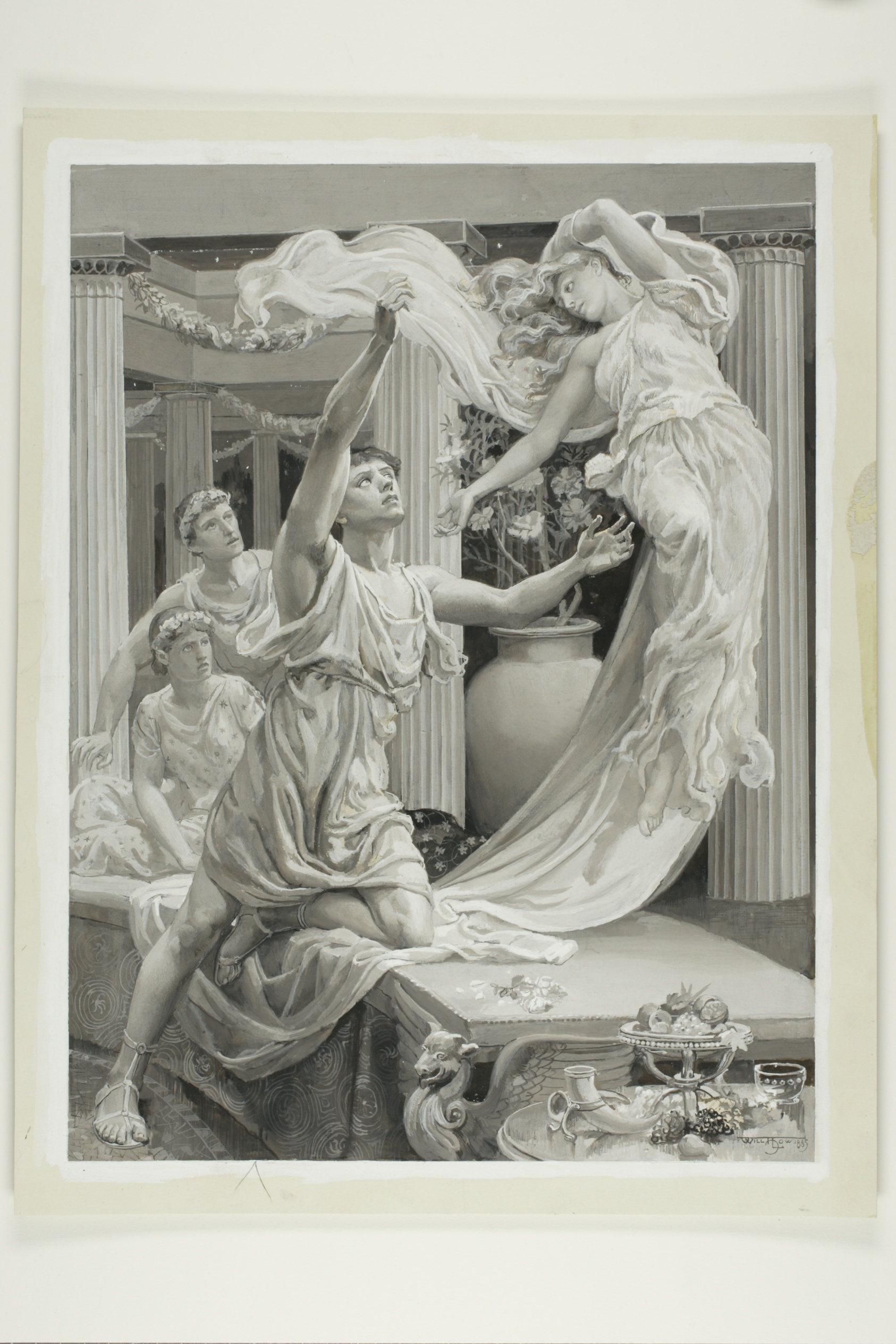
And Lycius' Arms Were Empty of Delight
Will Hicock Low · 1885
- Medium
- Brown and white gouache, over traces of black chalk, on cream wood-pulp laminate board
- Original size
- 45.1 × 35 cm (17 13/16 × 13 13/16 in.)
- Currently held
- Art Institute of Chicago
- Movement
- Impressionism
Rendered in delicate brown and white gouache on a warm cream board, this 1885 work by Will Hicock Low captures a moment of mythological grief with quiet, almost tender restraint. Low was a New York-born artist who trained in Paris under Jean-Léon Gérôme and became one of the more refined voices of the American Aesthetic Movement — a painter drawn to classical subjects, soft tonalities, and the mood of poetry rather than narrative drama. His gouache technique here gives the composition an intimate, sketch-like quality that feels closer to a private study than a public statement, which only sharpens its emotional weight. The title draws from John Keats' "Lamia," the moment when the enchantress vanishes and Lycius is left holding nothing — arms full of absence. Low had a well-documented affinity for Keats and the English Romantic poets, and several of his works from this period treat similar themes of beauty dissolving at the edge of reality. The original is held in the collection of the Art Institute of Chicago, where it remains a quiet highlight among the museum's nineteenth-century works on paper. This hand-painted oil reproduction translates Low's subtle tonal range and elegiac mood into a format made to last, bringing one of the Aesthetic Movement's most poignant small works into your home.
Hand-painted oil reproduction
Painted in real oil on stretched canvas by master copyists. Delivered unframed — ready to frame at home.
Choose a size
In Low's style.
Send us a photograph of your family, pet, or home — we'll paint it as a custom oil on stretched canvas in any style you like. From £220.
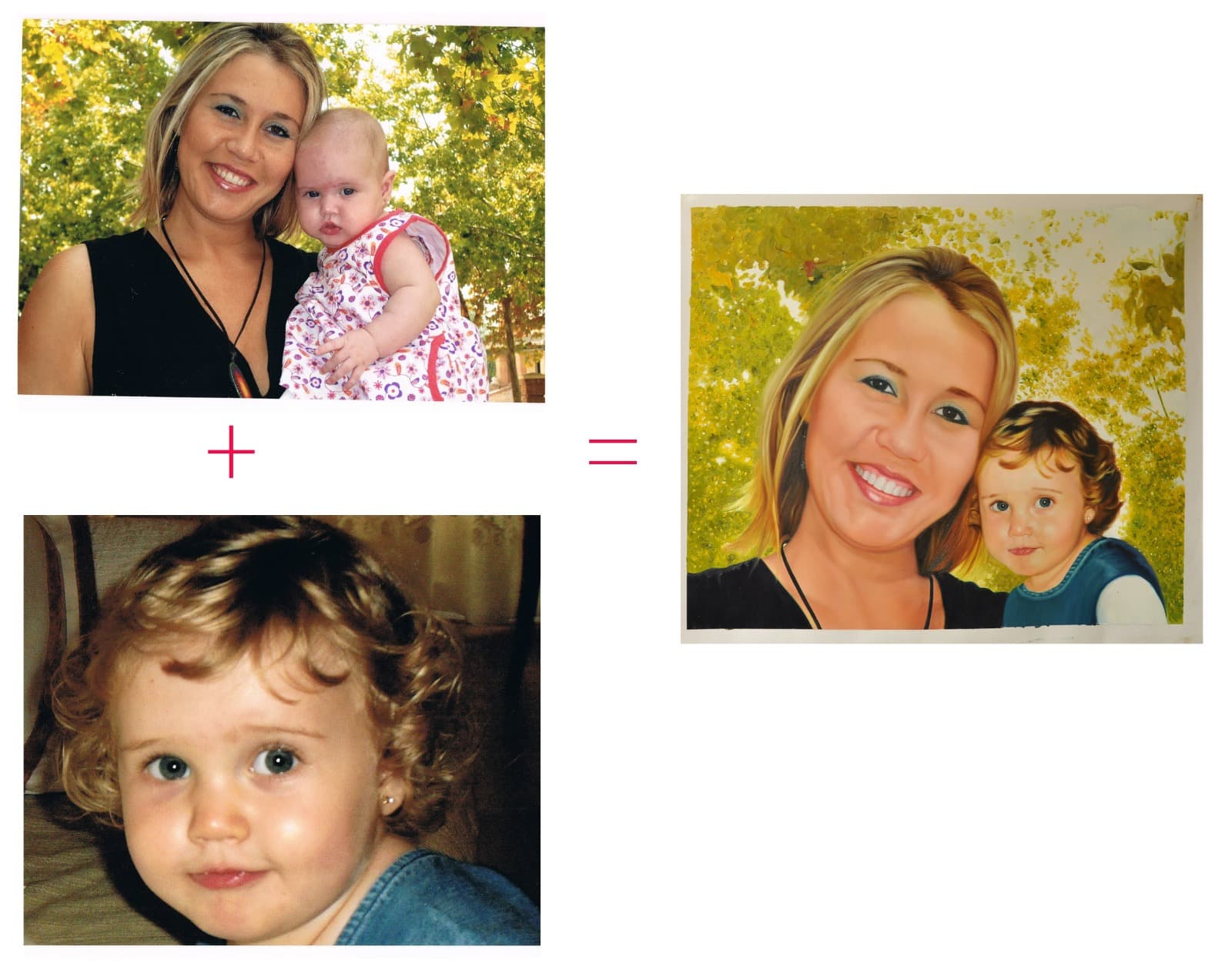
← Real customer commission · see the full gallery
Code WELCOME20 at checkout for 20% off your first commission.
Commission yours →