Subjects · · 3 min read
Colourising Black and White Photos: What Looks Real and What Doesn't
How colourising a black and white photo works, what comes out looking natural, which colours are a best guess, and how to get the family details right.
By Thomas Mark
Last updated: September 2026
Colourising black and white photos
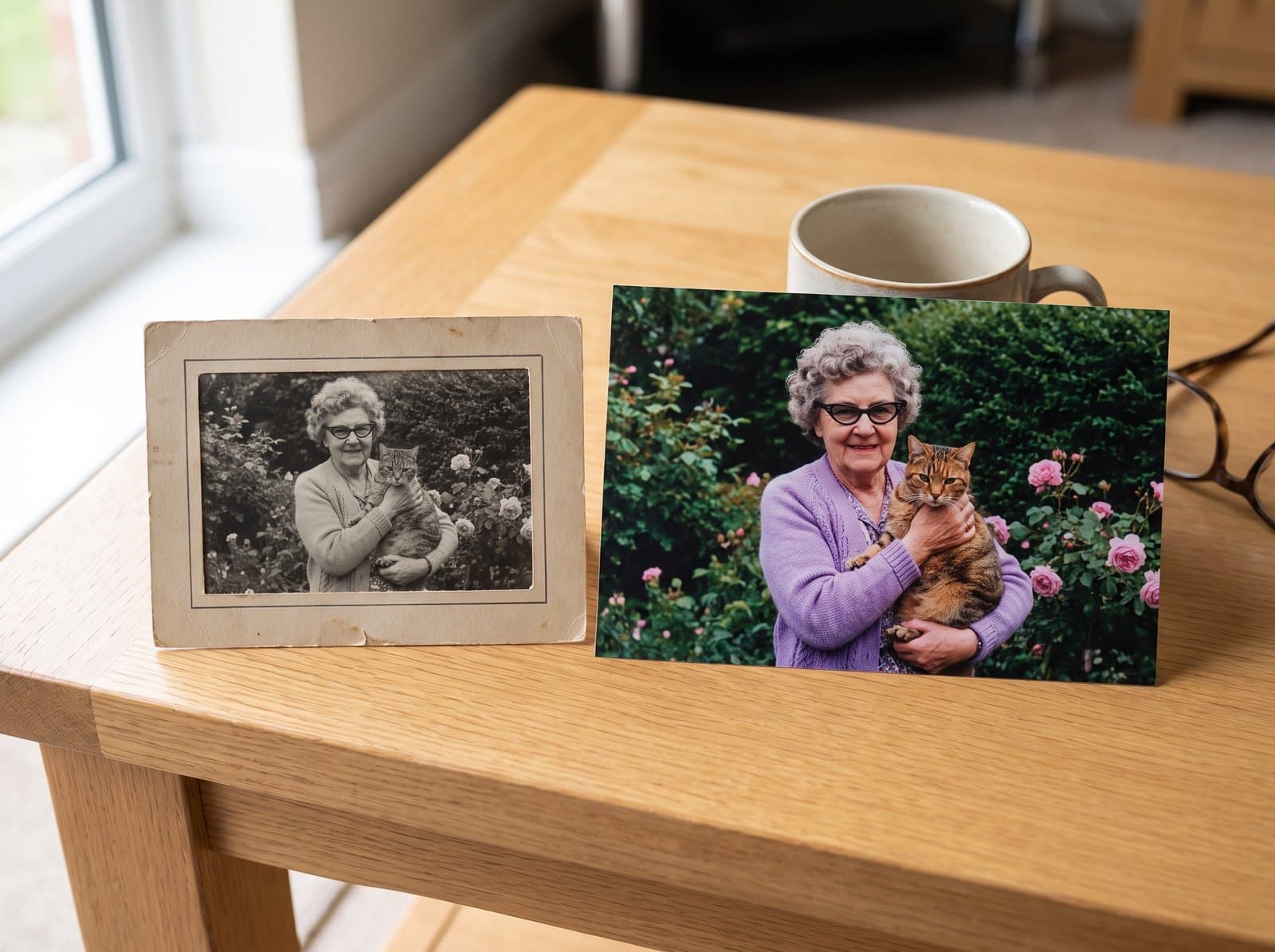
Quick answer: A colourised photo is an informed reconstruction, not a recovery. A black-and-white photograph records how light or dark things were, not what colour they were. Skin, sky, grass, brick and wood come out convincingly. Clothes, cars, painted doors and eye colour are a best guess unless someone remembers them, so tell whoever is colouring it what you know. We add colour at no extra charge as part of a £9 photo restoration.
What colourising actually does
Every grey in a black-and-white photo stands for a brightness, and many different colours share the same brightness. A red dress and a green dress can come out as exactly the same grey. Colourising reads the context, such as this is skin, this is sky, this is a hedge, and gives each area a colour that fits both its surroundings and its grey tone.
What usually looks right
- Skin tones, which follow the light and shadow already in the photo.
- Hair, at least whether it's dark, fair or grey. The exact shade is harder.
- Sky, grass, trees and hedges.
- Brick, stone and wood.
- Things everyone knows the colour of, such as a pillar box, a school tie in a famous pattern, or a regimental uniform that can be looked up.
What's a best guess
- Clothing, unless it shows a known pattern.
- Cars, doors, curtains and wallpaper.
- Eye colour. A photo shows light eyes or dark eyes, not blue or green.
- Flowers, whose varieties come in many colours.
Getting the family details right
This is where relatives are worth a phone call. Ask about the things a guess can't know:
- "Her wedding going-away suit was pale blue."
- "Grandad's eyes were bright blue."
- "The car was a red Ford Anglia."
Put details like these in the notes when you order, and they'll be used instead of a guess.
Restore it first, then add colour
Stains, fading and scratches confuse colour: a brown water stain can end up read as part of a face. Repair the damage first. Ours does both together, and the damage repairs are covered in how to fix a torn, creased or water-damaged photo.
When to leave it black and white
Some photographs are better left as they were: formal studio portraits whose mood depends on the black-and-white look, or very faded prints where there isn't enough tone to hang convincing colour on. A restored black-and-white photo is still a big improvement.
Colour, and a painting
A painter can paint a black-and-white photograph in full colour, using the same kind of family knowledge. It's a common request for memorial portraits. See can you paint from a blurry or old photo? and commissioning a painting from a photo.
Frequently asked
Is colourising a photo accurate?
The overall look can be very natural, but individual colours such as clothes, cars and eye colour are a best guess unless you tell us what they were.
How much does it cost to colourise a photo in the UK?
Some services charge £30 or more. Ours is included in the £9 restoration price, if you tick the colour option when you order.
Can you colourise a photo without restoring it?
It's best done together. Damage left in the photo gets coloured along with everything else and can look odd.
Will colourising change the faces?
It shouldn't. The colour goes on top of the same features. Check the result against the original and tell us if anything looks different.
More onOld photos