commissioning · 9 min read
How to Commission a Painting: The Whole Process, Explained
What actually happens when you commission a painting from a photograph — the routes open to you, the process step by step, and the questions to ask before you pay.
By Thomas Mark
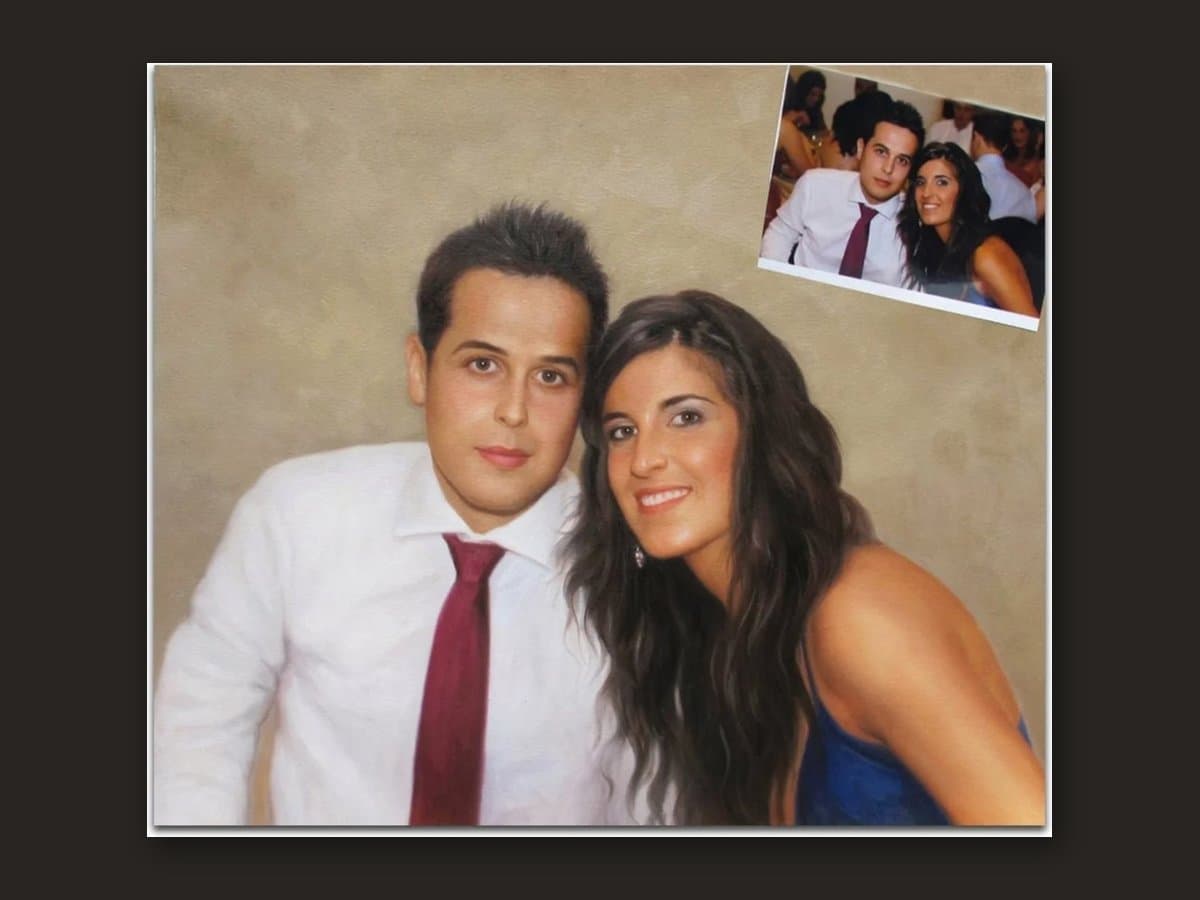
To commission a painting is to pay someone to make a single object that does not yet exist, to your brief. Here it means sending a photograph, agreeing a size and a price, and receiving a hand-painted oil portrait about three to four weeks later, rolled in a tube for you to frame locally.
That is the whole thing in one sentence. The rest is detail, and the detail matters, because art commissioning is one of the few purchases where you cannot inspect the goods before they are made, and where a good outcome is usually settled in the first ten minutes by the photograph.
What commissioning means, and the routes open to you
A commission is not a product off a shelf. You are buying somebody's hours and judgement, applied once, to your subject, which means price, timeline and approval all behave differently from ordinary retail. There are three realistic routes if you want to commission artwork from a photograph, plus one honest alternative that is not a commission at all.
| Route | Best at | Where it falls down | Relative cost |
|---|---|---|---|
| A local portrait painter | Sittings from life, a genuine personal interpretation, meeting the person holding the brush | Waiting lists, and by a wide margin the most expensive route — you are buying one artist's undivided weeks | Highest |
| A specialist hand-painting studio | Predictable price and turnaround, painters who do portrait work full time, wide size range | You never meet the painter, everything rests on the photograph, and trust has to be built on evidence rather than a handshake | Middle |
| A marketplace listing | Low commitment, a formal dispute route if it goes wrong | The seller is often not the painter, "hand-painted" is loosely policed, and your recourse is a form rather than a conversation | Low to middle |
| A print-on-canvas shop | Price, speed, and accuracy — a print cannot get the likeness wrong | It is a photograph on cloth: no paint on it, and it does not read as a painting across a room | Least |
We are the second row: a specialist studio, where professional artists paint portraits full time. That explains both the price and the handshake you will never get, which is why everything here is built on evidence you can check before you pay.
If you are still weighing a painting against a good print, settle that first. Our comparison of oil paintings and prints is blunt about when the print wins — a low-resolution phone snap makes a poor painting and a perfectly decent canvas print.
Step by step: how a commission runs here
Most people who commission a painting for the first time expect a long negotiation. It is shorter than that.
One. You send the photograph and pay. The order form asks three things: the photograph, who or what is in it, and the size. There is a notes field, and that is where anything particular goes — a renaissance costume treatment, a changed background, a person moved in from a second photograph. None of it costs extra and there is no style menu. You pay once, at checkout, at the price shown for the size: no deposit schedule, no milestone billing.
Two. We check the photograph within hours, 9am to 5pm Monday to Saturday (UK time). This step decides the outcome. We say honestly whether the photograph will paint well and, if not, what to send instead — or refund you in full. Sometimes the answer is that a painting is the wrong call — a badly lit group shot where no face is readable will not become a good portrait, and no skill invents information the camera never captured. Our guide on choosing a photo for an oil portrait is the checklist we apply.
Three. It gets painted. Three to four weeks in the studio. We do not send progress photographs, and that is deliberate: an oil painting looks wrong for most of its life, and a half-finished face prompts panicked change requests about things that were always going to change in the next session.
Four. You see a photograph of the finished painting. Before it is packed, you get a photograph of the completed work. If something is off, say what, and it goes back to the painter until it is right.
Five. It ships rolled in a tube. Unframed, on canvas, rolled, for you to take to a framer near you. A tube survives couriers far better than a stretched canvas, which is a drum skin waiting for a corner knock, and a local framer will match the painting to your wall better than anything shipped with it.
The important asymmetry: the money moves early, the approval comes late. You approve the finished painting, not a plan for one.
What an honest studio should show you before you pay
Four things, and any of them being missing is worth a question.
Real examples, paired with their source photographs. A gallery of paintings proves nothing on its own. Before-and-after pairs show what the studio does with the kind of photograph you actually have, which is rarely the studio-lit ideal. Ours are in the gallery, each painting beside the photograph it was painted from.
Who paints it. A genuine studio will say plainly that a trained artist paints each piece by hand, and show their work alongside the photographs it came from. If a site goes vague on this, assume a printer is involved, and price accordingly.
An approval step before dispatch, in writing. "You approve it before it ships" and "you can return it if you dislike it" are very different promises. The second leaves you posting an oil painting back.
A straight answer on what hand-painted means. It should mean brush on primed canvas from a blank start, not a printed image with paint dragged over it, and certainly not a filter. "Oil-effect", "oil painting style" and "digital oil" all describe a print with better marketing.
How the price is built
Size drives almost everything, because size is time. A commission runs from £220 for 12 × 16 inches to £549 for 36 × 48, with the usual sizes in between. Each additional person or pet in the picture adds from £35, since each face is another likeness to get right. Reproductions of existing famous paintings start lower, at £129, because the painter is copying a known image rather than interpreting a photograph.
Style is not a price line here. A renaissance costume portrait, a darker background, different clothes — that is a note on the order form, not an upgrade tier.
For the full breakdown of what those numbers pay for, including why the very cheapest listings cannot be what they claim, see our guide to custom oil painting costs or the shorter piece on what a commissioned oil painting costs.
How long it takes
Three to four weeks of painting, plus delivery. The clock starts when the payment clears, not when you submit the form, and the approval loop at the end can add a few days if a revision is needed.
If it is a present for a fixed date, work backwards and add a fortnight of slack for framing at this end, which is easy to forget and not instant. There is more on where the weeks go in our post on how long a commissioned painting takes.
Revisions: what is normal and what is not
Normal and expected: a skin tone reading too warm, eyes not quite carrying the likeness, a background heavier than you pictured, one person in a group who is not yet themselves. Say precisely what is wrong — "his eyes look older than in the photo" is workable, "something's off" is not — and the painter takes another pass. That is what the approval photograph is for, and it costs nothing.
Not fair to ask: a different composition after the painting exists, a pose that was in none of the photographs you sent, or detail the camera never recorded. If a jawline sits in deep shadow, no painter can retrieve it. They can only invent it, and an invented jaw is what makes a portrait feel like somebody else.
Watch, too, for a studio that treats a revision request as a complaint, or one whose revisions only happen after delivery. A revision before dispatch costs you an email. After dispatch it costs you return postage on a fragile object.
What a bad commission looks like
The warning signs are usually on the listing, before any money moves.
A price well below the cost of the paint and the hours. Turnaround promises of 24 or 48 hours on something described as hand-painted. A gallery of images that also appear on three other sellers' listings. No statement of who paints it. Sizes given as "large" or "medium" rather than in inches. No approval step before dispatch, or an approval step that only exists once the parcel is at your door.
One more, which cuts against the grain: a free instant digital preview is not evidence of anything. It is almost always a software filter applied to your upload, and it tells you nothing about whether a human being can paint.
Questions to ask before you pay
Ask any studio, including us:
- Who paints it, and do they paint portraits full time?
- Is it painted on blank canvas, or over a printed base?
- Do I see the finished painting before it is dispatched, or only after it arrives?
- How many rounds of changes are included, and what do they cost?
- Does it arrive rolled or stretched, framed or unframed?
- What are the exact dimensions in inches?
- What is the total, including delivery, and is there anything else to pay on arrival?
- What happens if it is wrong, and who pays the return postage?
A studio that answers all eight quickly is one you can work with. Hesitation on the first three is the useful signal.
If you have read this far and the answer is that you want to commission a painting, the commission page has the sizes and prices.
Frequently asked questions
Can I commission a painting from outside the UK?
Yes. Prices are quoted in pounds and the painting ships from the studio, so distance is a delivery question rather than a process one. Delivery is included in the price wherever it is going, and any import VAT or duty charged by the destination country is separate from delivery and is yours to pay. The steps are identical: photograph and payment, photo check, painting, approval photograph, dispatch.
Do you sign the painting?
Treat signing as a decision rather than something to leave to chance. Put what you want in the notes field on the order form — signed, unsigned, or signed discreetly in a particular corner — and it goes to the painter with the rest of the brief. It costs nothing either way.
Is it insured in the post?
Paintings travel rolled in a rigid tube, which is the most robust way to move an oil painting and the reason nothing ships stretched. If a parcel does arrive damaged, photograph it before unrolling anything further and tell us; the refunds and returns page sets out where that goes.
What if I do not like the finished painting?
You see a photograph of it before it is packed, which is the point of that step — say what is wrong and the painter keeps working. If it genuinely cannot be got right, the refunds page covers the rest.
Do I need to know what style I want?
No. There is no style picker and no style surcharge. Most commissioned portraits are painted straight from the photograph in a traditional oil style; if you want something else — a renaissance costume, a plain background, a season changed — write it in the notes and it will be painted that way.