Subjects · · 8 min read
Keeping a Dog's Memory Alive: Ideas That Last
Keeping a dog's memory alive is slower work than grieving. Gentle, practical UK ideas — photos, rituals, writing, donations, portraits — with honest costs.
By Thomas Mark
Last updated: September 2026
Keeping a Dog's Memory Alive
Quick answer: Keeping a dog's memory alive is a different job from getting through the first few weeks, and it rewards doing less, more deliberately. The things that hold up over years are the ones you'll actually encounter — a photograph at eye level, a walk you still do on their birthday, a page of stories written while the small details are still there — rather than the ones that sit in a drawer or a flower bed. Most of the ideas below cost nothing or close to it. The one that costs real money, a hand-painted portrait of your dog from a photograph you already have, runs £220 to £549 and takes three to four weeks, and there is no hurry about any of it.
Memory fades in a particular order
The details of a dog go in a fairly consistent order. The big things stay: what they looked like, the shape of their walk, the way they leaned on your leg. What goes first is the sound — the click of nails on the kitchen floor, the sigh when they settled, the particular bark reserved for the postman. Then the routine goes, because it lived in your body rather than your head: the reflex to check the water bowl, the weight you shifted to leave room on the bed. A year on, a lot of people find they can't summon the sound of their dog any more and need a recording to get it back.
That tells you where to put your effort. Anything that preserves sound, movement and the ordinary routine is worth more than a fifth photograph of them sitting nicely in the garden.
Start with what you already have
Before buying anything, spend an evening on the material that exists. It's the least glamorous part of keeping a dog's memory alive and by far the most valuable.
Go through your phone and pull every video, however short and however badly filmed. The thirty-second clip of them refusing to get out of the car beats any posed picture. Put the clips in one album and back it up somewhere that isn't your phone.
Do the same with photographs, but be ruthless. Pick the ten that are genuinely them, not the hundred where they're a brown shape on a beach. If any of the ten are printed and framed, they'll be seen. If all hundred stay on a phone, none of them will.
Then the physical things: the collar, the tag, the paw print the vet may have taken, the lead with the worn patch where your hand sat. Put them together, in a box if you can't look at them yet. Nobody who kept the collar regrets it, and plenty of people who threw it out in the first fortnight do.
Rituals beat objects
The most reliable way of keeping a dog's memory alive isn't a thing. It's a date.
Pick one — the birthday, the day you brought them home, or the day they died — and do the same walk every year. Same route, same time of day, ideally the one they'd have chosen. A dog's life is mostly made of repetition, so honouring them with repetition makes a kind of sense that a one-off gesture doesn't. It also gives the rest of the household somewhere to put the feeling, which matters if there are children; let them help choose the route.
Smaller rituals work too. Keep buying the biscuits and give them to the dog next door. Leave the hook for the lead where it is. Say their name out loud when you pass the field. None of this needs explaining to anyone.
Write it down while you still can
Within two or three years the stories will have worn down to the same four anecdotes. Now, while the small ones are still there, sit down for an hour and write everything you can remember. Not a tribute — a list. The thing they did with their ears when you said "vet". The neighbour they hated. What they were afraid of. What they'd steal.
Handwritten is better than typed — you're more likely to keep it and less likely to tidy it. Ask other people who knew them to add a page — a dog walker, a grandparent, the friend who had them on holidays. They'll remember things you didn't see. If there are children in the house, get them to draw the dog and date the drawing. In fifteen years that drawing will be the thing they want.
Doing something in their name
Some people find the remembering easier if it points outwards. The usual UK routes are a donation to the rescue you got them from, sponsoring a kennel space at a shelter (typically £5 to £15 a month), or volunteering as a dog walker at a local rescue. Fostering is the bigger version of this, and it deserves a warning: it's a good thing to do and a bad thing to do too soon. Give it six months.
A bench with a plaque in the park they used is the traditional gesture, and it's worth checking with the council before you get attached to the idea. Many have waiting lists, and it usually costs £600 to £2,000 including the bench. A tree dedicated through a woodland scheme is cheaper, around £20 to £60, and needs no permission from anyone.
Something to look at every day
Everything above is either free or points away from the house. At some point most people also want one thing indoors, at eye level, seen without going looking for it.
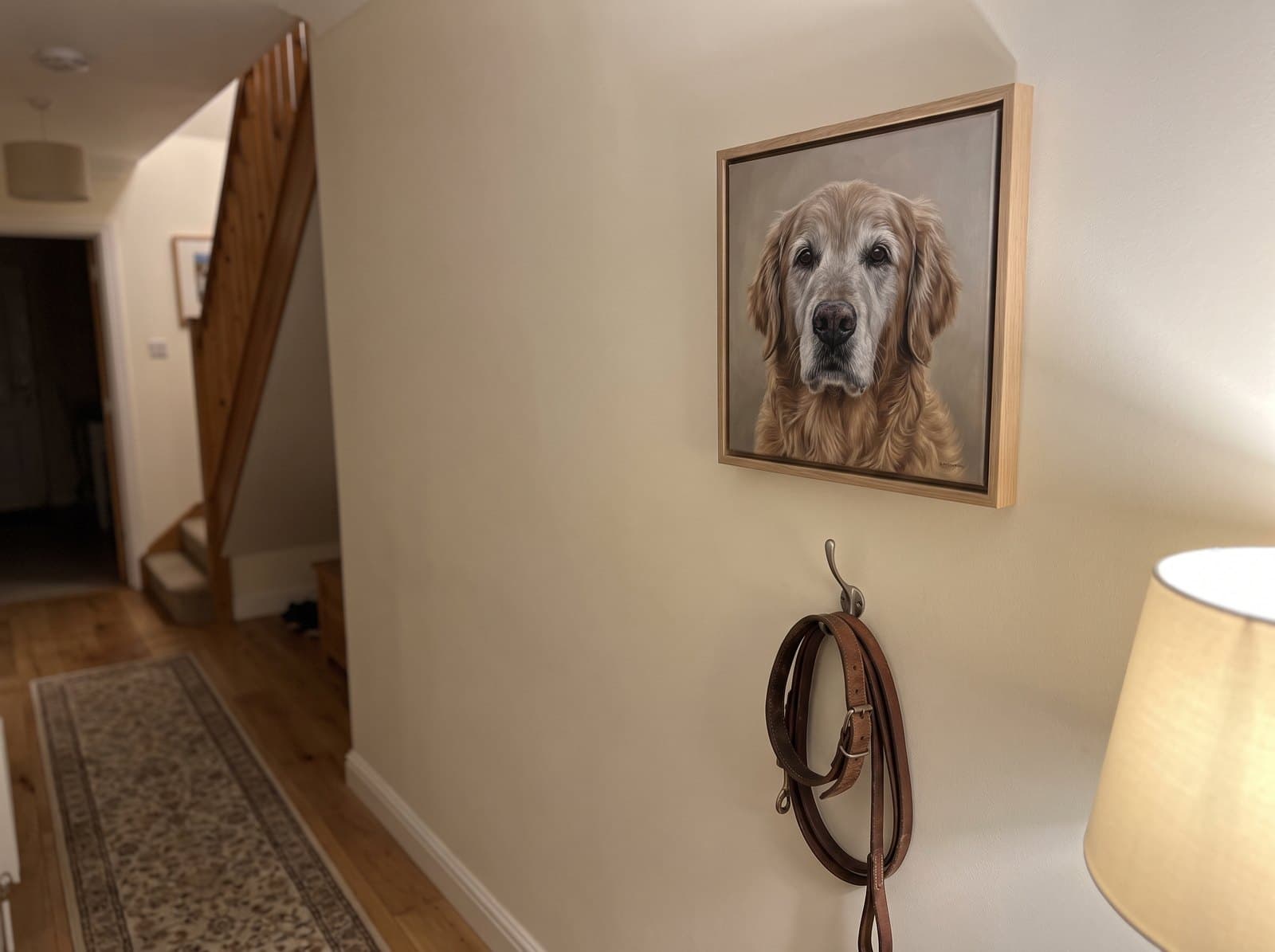
A framed photograph is the obvious version, and there's nothing wrong with it. The reason some people go further and have the dog painted is that a painting is a decision — it says this animal was worth the effort — and it doesn't fade, curl or end up behind the fruit bowl. We paint in oils from an ordinary photograph, phone pictures included, at £220 to £549 depending on size. Before it ships you're sent a photograph of the finished painting, and we keep painting until the eyes and the set of the ears are right — which matters more here than with any other commission because there won't be another photo. It takes three to four weeks to paint, plus delivery; the pricing page sets out the sizes. If you're doing this for someone else who is grieving, the memorial portrait page covers how to go about it without asking them for the photograph directly.
It is one option among several, and not the right one for everybody. Someone who can't yet look at a photograph without going to pieces isn't ready for a canvas of the dog in the sitting room, and there's no deadline.
The options side by side
| Idea | Typical UK cost | Time involved | Best for |
|---|---|---|---|
| Sorting and backing up videos and photos | £0 | One evening | Everyone, first |
| Written page of stories | £0 | An hour | Details you'd otherwise lose |
| Annual walk on their date | £0 | Ongoing | Households with children |
| Collar and tag in a box frame | £25–£60 | A fortnight | Something genuinely theirs |
| Memorial tree via a woodland scheme | £20–£60 | 1–3 weeks | Something living, no garden needed |
| Park bench with plaque | £600–£2,000 | Months, council permitting | A place to go |
| Hand-painted portrait from a photo | £220–£549 | 3–4 weeks | Something at eye level, every day |
Most of these combine. The written page and the backed-up videos are the two nobody skips in hindsight; everything else is a matter of taste and timing.
What doesn't help
Rushing. People who order the stone, the jewellery and the portrait in the first week often find that six months on they'd have chosen differently. If you're deciding what to do with the ashes as well, there's no deadline on that either. Getting rid of everything is the mistake in the opposite direction. Bag things up if you need them out of sight, but don't put the bag in the bin yet.
And if this is for someone else who has just lost a dog, the kindest thing is usually to hold off on buying anything and simply say the dog's name to them. What to give someone whose dog has died is a separate question, and the answer is mostly about timing.
Frequently asked
How do I keep my dog's memory alive after they die?
Save what exists first — videos, photographs, the collar — and back it up. Then pick one date a year to do their walk, and write down the small stories before they fade. Physical memorials come after, and there's no rush on any of them.
Is it normal to still miss a dog years later?
Yes. A dog is part of the daily routine in a way few people are, and routines leave gaps that last. The sharp part usually eases within a year; a quieter version stays and comes back on their date or in the places you walked. That's memory doing its job, not a problem to fix.
What can I do with my dog's collar and tag?
The two common choices are a deep box frame on the wall, £25 to £60 at any framer, or keeping it in a box with the lead and the paw print. If you can't look at it yet, put it away rather than out — it'll still be there in a year.
Should I get another dog straight away?
There's no right answer, but many rescues suggest waiting a few months. A new dog isn't a replacement and isn't a betrayal either. When you find you're thinking about a dog rather than about your dog, that's usually the sign.
Can a painting be made from an old or blurry photo?
Usually. What matters is whether the face reads clearly, not the resolution — an old print photographed with a phone in daylight is a normal starting point, and colour that has faded gets corrected rather than copied. If in doubt, send the photo and ask before ordering.
The short version: keeping a dog's memory alive is mostly a matter of saving what's there and repeating what mattered. The objects come later, if they come at all.