Subjects · · 8 min read
Commissioning a Horse Portrait: A Straight Guide
A horse portrait commission, without the gloss: which pose to choose, the photo that actually works, tack or no tack, sizes, UK costs and how long it takes.
By Thomas Mark
Last updated: September 2026
Horse Portrait Commission
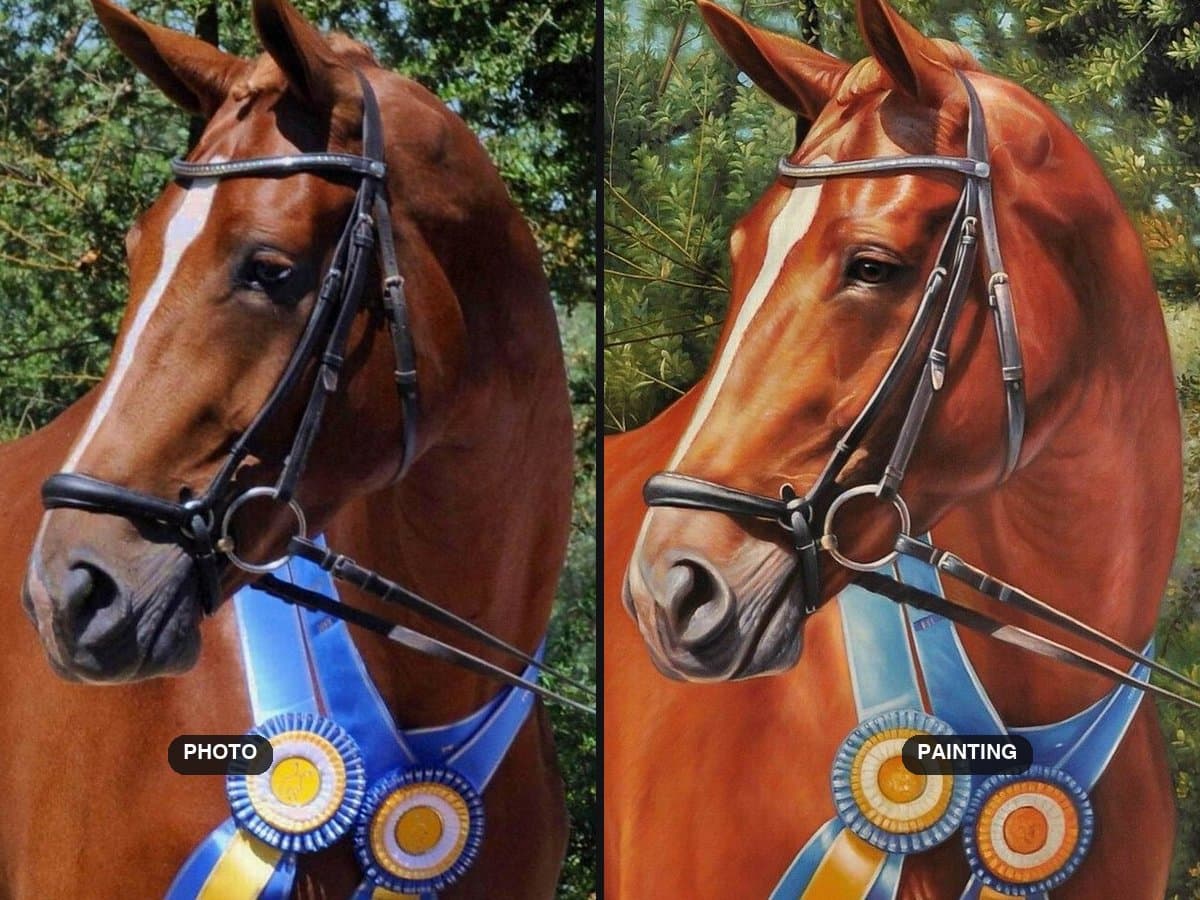
Quick answer: A horse portrait commission is a hand-painted oil on canvas worked up from a photograph you supply, and from a studio working from photographs it costs £220 to £549 depending on canvas size, with a second horse or a rider adding from £35. Allow three to four weeks plus delivery, and before it ships you'll get a photograph of the finished painting to approve; we keep painting until it's right. The decisions that actually matter are the pose (a head study or the whole horse), whether it wears tack, and which photograph you send, because the painter can only be as accurate as the image in front of them. Ours are painted from your photo through the horse and animal commission page.
Why horses are harder than dogs
Nobody minds much if a spaniel's ears come out fractionally long. A horse owner will spot a short back, a coarse throat or a wrongly set ear from across the room, because they have spent years looking at that exact animal from the ground, from the saddle and over a stable door. Horses are judged on conformation in a way dogs mostly aren't, so a painting that gets the proportions slightly wrong reads as a different horse rather than a flattering version of the same one.
Then there is colour. "Grey" covers everything from a near-white twenty-year-old to a dappled four-year-old, and bays run from almost red to nearly black. A painter who has never been near a yard will make a bay too orange and a grey too clean.
Markings are the horse's fingerprint. A star, a snip, a blaze, one white sock or three: these have to be exactly right. A decent photograph settles all of this. The problem is that most of the photographs on an owner's phone were taken from the wrong place.
Choosing the pose
Broadly there are three ways to approach a horse portrait commission, and they make different demands.
A head study is the classic and, for most people, the right answer. Head and the top of the neck, three-quarter on, ears pricked. It gives the most likeness per square inch, fits a 16 × 20″ or 20 × 24″ canvas comfortably, and the eye, which is where a horse's character lives, can be painted large enough to matter. Taking in the shoulder as well suits a horse whose type is part of the point, and wants a photo taken from a little further back.
The whole horse standing is the conformation shot, stood up square and side on, as in a sales advert. It shows the animal properly and it is the pose most likely to expose a weak painting, because every proportion is on display. It needs a landscape canvas of 24 × 36″ upwards and a photograph taken at the horse's eye level from six or seven metres away.
Ridden or in action makes a striking painting and is the hardest to source a photo for. Event photographers' images are often the best you have, and you will need their permission to use one. Phone photos of a moving horse are usually too soft to paint from.
What the photograph needs to be
This is where a horse portrait commission succeeds or fails, and it is worth an hour of your time.
Get to the horse's eye level. A phone held by someone standing at the horse's head is looking down at it, which shortens the legs and enlarges the poll. Stand back, crouch for a pony or use a mounting block for a big horse, and zoom rather than walking closer; phone lenses used close up swell the nose.
Ears forward. Have a second person stand behind you and rustle a feed bag. You get a few seconds of interest before the horse decides it was a lie, so have the camera ready first. Ears back turn a portrait into a picture of a bored horse.
Soft light: an overcast day or open shade. Bright sun puts a hard shadow under the eye and bleaches the top of a grey to nothing.
Groom the horse as if for a show, decide about tack before you shoot, and take twenty photographs rather than two. Send the three you like and let the studio say which one works. The dog photography guide applies almost entirely to horses too, apart from the bit about treats.
Tack, rugs and plaits
Decide this deliberately, because it changes the painting. A bridle makes it a portrait of a ridden horse. A leather headcollar reads as a horse at home. Nothing at all is the most timeless and the hardest, because without leather across the face the painter has to get the whole head right with no lines to hang it on.
Rugs should come off; a horse in a rug is a rectangle with a head on it. Plaits are taste: a plaited mane says show day, a loose one says the field. Rosettes and competition numbers date the painting to one afternoon and are best left out.
Size, and where it will hang
Horses want more canvas than people expect. A head study at 12 × 16″ works on a shelf, but on a living-room wall it looks like a postcard. The sensible default for a head study is 16 × 20″; 20 × 24″ gives the eye room to be painted properly. The whole horse standing needs landscape orientation and 24 × 36″ or larger, or the horse becomes a small object in a big field. Full length with a rider up needs 30 × 40″ or 36 × 48″ to keep the rider's face legible.
Our size guide covers the measuring. The short version: cut newspaper to the size you're considering, stick it on the wall for a day, then go one size up.
What it costs and how long it takes
A horse portrait commission is priced by canvas size and number of subjects, not by how difficult the horse is.
| Composition | Canvas that suits | From | Photo you need | Pick it when |
|---|---|---|---|---|
| Head study | 16 × 20″ or 20 × 24″ | £275 | Three-quarter head, ears pricked, eye level | You want the character, not the whole animal |
| Whole horse standing | 24 × 36″ or 30 × 40″, landscape | £449 | Side on, stood square, from 6–7 m | Conformation matters, or the horse is a type |
| Horse and rider | 30 × 40″ or 36 × 48″ | £489 + £69 | Sharp, rider's face visible | The partnership is the point |
| Two horses | 24 × 36″ upwards | £449 + £55 | Both heads level, same distance from camera | A pair that live together |
All prices are for a hand-painted oil painting, shipped rolled in a tube and unframed, with worldwide delivery included, and match the pricing page. Framing is separate, and deliberately so: a horse portrait tends to want a plain, wide moulding in dark wood, and a local framer will stretch and fit it better than anything shipped ready-mounted. Budget £80 to £250 and two to three extra weeks.
Timing is three to four weeks from sending the photo, plus delivery. Before it ships we send a photograph of the finished painting for you to approve. If it shows the blaze an inch too wide, that is the moment to say so; we keep painting until you're happy. Order six weeks before the date you need it, nine if framing is involved.
Painting a horse that has gone
Some horse portraits are commissioned after the horse has died, and the photographs are whatever happens to exist. Old prints, a soft phone photo from years ago, a picture with the horse in a rug: all of these are usually workable, because what matters is whether the head and markings are legible. A painter can take the rug off, correct a colour cast, and combine the pose from one photo with the light from another. What can't be reconstructed is a face that isn't in any photograph, so if the only clear picture is from behind, ask before ordering rather than hoping.
If this is why you're reading, there is no hurry. The photographs will keep.
When a painting is the wrong choice
- You need it inside a fortnight. Oil takes weeks to paint and to dry. A good framed print of the best photograph is the honest option for a short deadline.
- Every photograph is from the wrong angle. Photos looking down from the saddle, or of a horse with its ears back, produce an accurate painting of a poor photo. Take new ones first if the horse is still around.
- The horse is about to be sold. Take the photographs now and commission later if you still want to. The reference is the urgent part, not the order.
Frequently asked
How much does a horse portrait cost in the UK?
A hand-painted oil from a studio working from photographs is £220 to £549 depending on canvas size, with a rider or second horse adding from £35. A named equestrian artist working from life will be £1,000 upwards and often has a waiting list. Below about £150 you are almost always buying a print with varnish over it.
What is the best photo for a horse portrait?
Taken at the horse's eye level, from a few metres back with the camera zoomed in, in soft light, with the ears pricked. For a head study, three-quarter on beats straight side on because it shows both eyes. Sharpness on the eye and the markings matters more than anything else.
Can you paint a horse from an old photo?
Usually, yes. Faded prints, small photographs and slightly soft images are normal starting points, and colour that has drifted gets corrected on the way. The test is whether the face and markings can be read clearly; if the horse is a distant shape in a field, that is a painting of a field.
How long does a horse portrait commission take?
Three to four weeks from the day the photograph is sent, plus delivery. Before it ships we send a photograph of the finished painting for you to approve, and we keep painting until it's right. Add two to three weeks for framing locally. The slow part is nearly always the owner finding or taking a photograph that is good enough, which is why it is worth doing that first.